
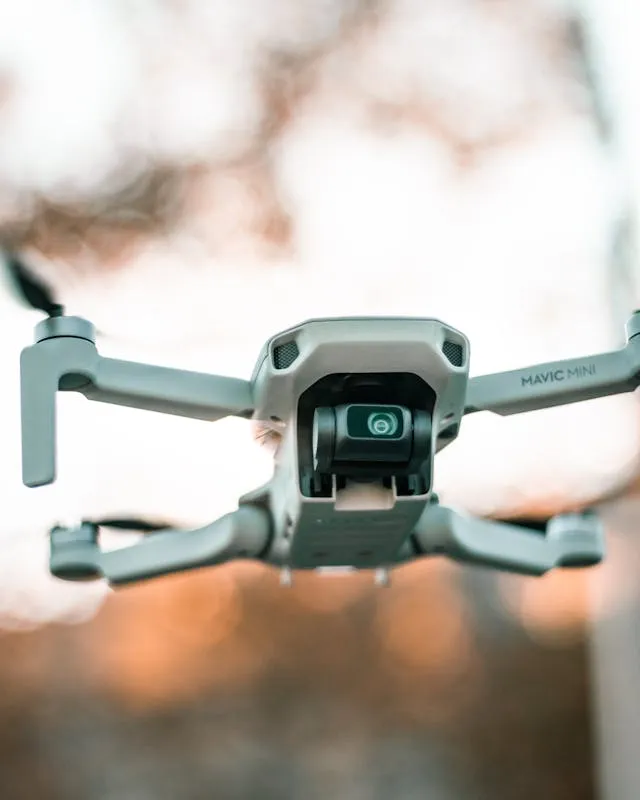
The original DJI Mavic Mini matters more for what it started than for what it can do today. Launched in late 2019, it was the first genuinely capable camera drone to land at exactly 249 grams, one gram under the registration threshold used in the US and across the EU. That single design decision created the entire sub-250g category that the Mini 2, Mini 4 Pro and Mini 5 Pro now dominate. This review is for one specific reader: someone who has spotted a cheap used Mavic Mini and wants an honest answer on whether it is still worth buying in 2026, or whether the money is better spent elsewhere. No nostalgia, just the facts and a clear verdict.
The one thing to know: the Mavic Mini is a discontinued, used-only drone whose biggest practical problem in 2026 is that DJI ended all service and support for it on 1 April 2026, meaning no more firmware fixes, no repairs and no official help. It flies pleasantly and stays under 250g, but its 2.7K camera, JPEG-only stills and complete lack of obstacle sensing are well behind even cheap modern alternatives. Buy it only as a near-throwaway first drone or a collector's piece, never as your main aircraft.
Specifications at a glance
The figures below come from DJI's published Mavic Mini specifications and contemporary reviews. The headline number is the weight: 249 grams was a deliberate engineering target, not a coincidence, and it is the reason this drone exists.
| Spec | DJI Mavic Mini (2019) |
|---|---|
| Takeoff weight | 249 g |
| Sensor | 1/2.3-inch CMOS, 12 MP |
| Max video | 2.7K at 30 fps (no 4K), 1080p up to 60 fps, 40 Mbps |
| Photo format | 12 MP JPEG only (no RAW) |
| Gimbal | 3-axis mechanical stabilization |
| Max flight time | 30 minutes (rated, ideal conditions) |
| Transmission | Enhanced Wi-Fi, up to 4 km (FCC) / 2 km (CE) |
| Obstacle sensing | None (downward sensors for landing only) |
What the Mavic Mini started
Before the Mavic Mini, the ultralight space was full of toys. DJI's achievement was packing a real 3-axis mechanical gimbal, a stabilized 2.7K camera and a 30-minute battery into a body that came in at exactly 249 grams. That weight sat one gram under the 250g line that triggers recreational registration with the FAA in the United States and operator registration across much of Europe, which made the drone unusually accessible to first-time flyers who wanted to avoid paperwork.
That formula proved so popular that DJI built an entire dynasty on it. The Mini 2, Mini 3 Pro, Mini 4 Pro and Mini 5 Pro all chase the same 249g target with progressively better cameras and smarter flight systems, and even spin-offs like the DJI Flip and Neo trace their DNA back here. If you want to see how far the line has come, our DJI Mini 4 Pro review covers the current high end of the sub-250g class. The original deserves credit as the pioneer, but credit and a purchase recommendation are two different things.
Strengths and limitations in 2026
What still holds up
- • Genuinely 249 g, so no recreational registration in the US
- • Stable, forgiving handling that is easy for beginners
- • Real 3-axis gimbal for smooth, watchable footage
- • 30-minute flight time that still beats many cheap drones
- • Compact, foldable and travel-friendly
Where it falls behind
- • Small 1/2.3-inch sensor, 2.7K max, no 4K
- • JPEG only, so very little editing latitude
- • No obstacle sensing of any kind
- • Wobbly Wi-Fi link that drops in busy areas
- • DJI support and repairs ended on 1 April 2026
The camera is the clearest sign of the Mavic Mini's age. The 1/2.3-inch sensor was already modest in 2019, and a 2.7K ceiling with no RAW means footage is fine for a phone screen but soft and noisy the moment you crop, print or edit hard. The complete absence of obstacle avoidance is the other serious gap: every modern Mini carries some form of sensing, and flying the original safely means keeping it in clear sight and well away from trees and buildings at all times. If you want the background on why a larger sensor changes everything, our explainer on drone camera sensors is the place to start.
The 2026 support deadline you cannot ignore
This is the single most important fact for any 2026 buyer. DJI placed the original Mavic Mini on its list of retired products and ended service and support for it on 1 April 2026. In practice that means no further firmware updates, no official spare parts or repairs, and no customer support if something goes wrong. The aircraft does not stop flying on that date, but you are now entirely on your own for maintenance, and parts like batteries and propellers will only get scarcer over time.
That changes the math completely. A used Mavic Mini is no longer a budget version of a current product, it is an orphaned device. You are buying hardware as-is, with the understanding that a failed motor, a cracked gimbal or a swollen battery effectively ends its life. Factor that risk into any price you pay.
How it compares: Mavic Mini vs Mini 2 vs Mini 4 Pro
The Mavic Mini only makes sense next to its own successors, because they are the obvious alternatives at similar or slightly higher used prices. The table uses published DJI specifications.
| Feature | Mavic Mini (2019) | Mini 2 (2020) | Mini 4 Pro (2023) |
|---|---|---|---|
| Weight | 249 g | 249 g | 249 g |
| Max video | 2.7K/30 | 4K/30 | 4K/100 |
| RAW photos | No | Yes | Yes |
| Transmission | Wi-Fi, ~4 km | OcuSync 2.0, 10 km | O4, 20 km |
| Obstacle sensing | None | None | Omnidirectional |
| DJI support | Ended Apr 2026 | Active | Active |
The comparison is not flattering. The Mini 2 is the single most important alternative, because it costs little more on the used market yet adds true 4K video, RAW photo capture and a vastly more reliable OcuSync 2.0 link rated to 10 km instead of the original's drop-prone Wi-Fi. Our DJI Mini 2 review goes deeper, but the short version is that it makes the original Mavic Mini hard to justify. The Mini 4 Pro sits a tier above again, adding full omnidirectional obstacle sensing, 4K/100 video and a much larger sensor, and it is the one to buy new if budget allows. Both, crucially, are still fully supported by DJI.
Who should still consider a Mavic Mini
There is a narrow case for the original. If you find one in good condition for well under 150 USD or euros, it can work as a near-disposable first drone to learn the basics on before committing to something better, or as a registration-free travel companion where you genuinely do not care about image quality. Collectors who want the drone that founded the category have an obvious reason too. For everyone else, the gap to a used Mini 2 is too large to ignore.
Before you buy any drone, used or new, it is worth understanding the running costs and the rules. Our look at whether buying a drone is worth it in 2026 covers the total cost beyond the sticker, and you can browse current options on our drones overview.
The verdict
The DJI Mavic Mini is one of the most important consumer drones ever made, and that legacy is real. As a 2026 purchase, though, it is hard to recommend. The dated 2.7K camera, JPEG-only stills, missing obstacle sensing and, above all, the end of DJI support in April 2026 make it an orphaned device best left to collectors and absolute-budget buyers. Anyone who wants a usable sub-250g drone should spend a little more on a used Mini 2 or buy a current model outright.
This review is based on DJI's published specifications, DJI's product retirement notice and reputable third-party reporting. It is not sponsored by DJI, and the site may earn an affiliate commission on purchases made through retailer links. Specifications and support status verified June 2026.
Frequently Asked Questions
Is the DJI Mavic Mini still worth buying in 2026?
Only in narrow cases. It is discontinued and DJI ended support on 1 April 2026, so there are no more repairs or firmware updates. It still flies well and stays under 250 g, but a used DJI Mini 2 adds 4K video, RAW photos and a far more reliable link for not much more, and remains fully supported.
Does the DJI Mavic Mini need to be registered?
At 249 g it sits one gram under the 250 g recreational registration threshold used by the FAA in the US, so casual recreational use does not require aircraft registration there. Commercial flights still need FAA Part 107 and registration regardless of weight, and rules differ by country, so always check your local regulator before flying.
What does the end of DJI support mean for the Mavic Mini?
DJI retired the Mavic Mini and ended service and support on 1 April 2026. The drone keeps working, but there are no more firmware updates, no official repairs and no customer support. If a motor, gimbal or battery fails, you are on your own, and genuine spare parts will get harder to find over time.
Mavic Mini or DJI Mini 2: which should I buy?
The Mini 2 for almost everyone. It is also 249 g but upgrades to 4K/30 video, RAW stills and OcuSync 2.0 transmission rated to 10 km instead of the original's drop-prone Wi-Fi, and it is still supported by DJI. The Mavic Mini only wins on price if you find one very cheap and accept it as an orphaned device.
Does the Mavic Mini shoot 4K video?
No. The original Mavic Mini tops out at 2.7K at 30 fps with a 40 Mbps bitrate, and it captures photos as 12 MP JPEG only, with no RAW. The Mini 2 was the model that added 4K and RAW, which is one of the main reasons it is the better used buy.