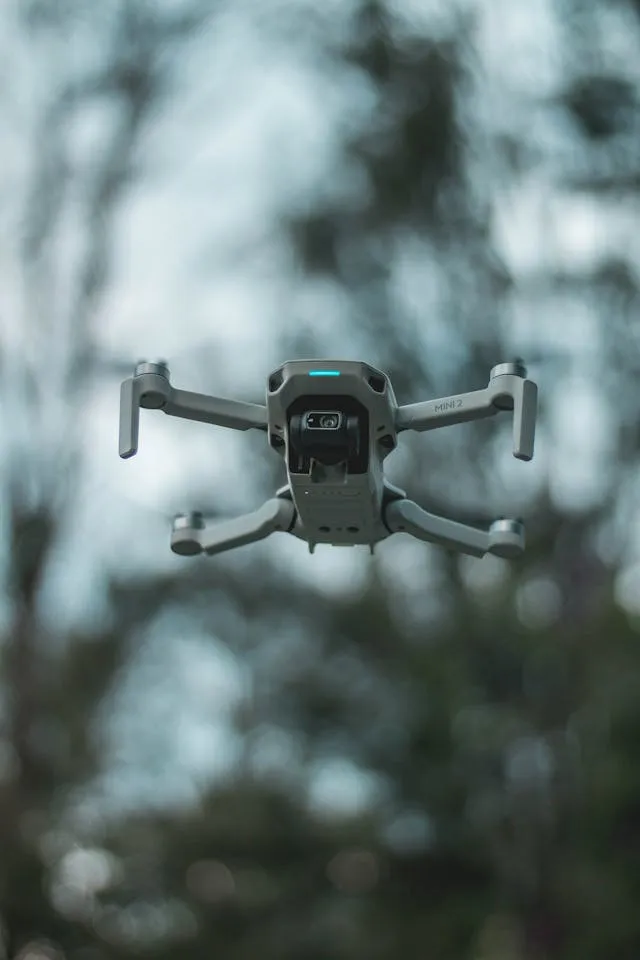
The DJI Mini 2 was, for a long stretch, the default answer to "what is the best first drone?" Launched in November 2020, it took the sub-250g formula and gave it the two things the original Mavic Mini lacked: real 4K video and DJI's OcuSync 2.0 transmission. This review is written for the 2026 buyer asking a more awkward question: is a five-year-old beginner drone still worth tracking down on the used market, now that the Mini 4 Pro, the Mini 5 Pro, and the cheaper Mini 4K all exist? No nostalgia, just the specs that matter and an honest read on where the Mini 2 still makes sense and where it clearly does not.
The one thing to know: the Mini 2 is no longer the drone to buy new. DJI has effectively replaced it with the Mini 4K, which puts the same 4K camera and OcuSync 2.0 link into a near-identical airframe for less money. The Mini 2 only makes sense today as a cheap used buy: it still delivers 4K/30, a stable 10 km link, and 31 minutes of flight in a sub-250g body, but it has zero obstacle sensing and a small 1/2.3-inch sensor that the newer Mini Pro models leave far behind.
Specifications at a glance
Every figure below comes from DJI's published specifications. The headline numbers still read well for a beginner aircraft: the limitation is not the spec sheet, it is what the spec sheet leaves out, namely any kind of collision protection.
| Spec | DJI Mini 2 |
|---|---|
| Takeoff weight | Under 249 g |
| Sensor | 1/2.3-inch CMOS, 12 MP |
| Video | 4K up to 30 fps, 2.7K up to 60 fps, FHD up to 60 fps |
| Photo | 12 MP JPEG and RAW (DNG) |
| Max flight time | 31 min (no wind, ideal conditions) |
| Transmission | OcuSync 2.0, up to 10 km (FCC) / 6 km (CE) |
| Wind resistance | Level 5 (up to ~38 kph gusts) |
| Obstacle sensing | None (downward sensors for landing only) |
The camera: genuine 4K, with the limits of a tiny sensor
The Mini 2's single most important upgrade over the original Mavic Mini was true 4K/30 capture, plus a 2.7K/60 option for smoother motion and the ability to shoot 12 MP stills in RAW (DNG) rather than JPEG only. For a 2020 drone aimed at first-timers, that combination was a step change, and it is the main reason the Mini 2 stayed relevant for years.
The honest caveat is the 1/2.3-inch sensor. In bright daylight it produces clean, sharp, perfectly shareable footage. Push into shadow, dusk, or any high-contrast scene and you will see the limits quickly: muted dynamic range, visible noise as ISO climbs, and skies that clip to white if you are not careful with exposure. There is no 10-bit log profile and no HDR video, so there is little latitude to rescue highlights in the edit. If you want to understand why a physically larger chip matters more than the megapixel figure on the box, our explainer on drone camera sensors covers the trade-offs, and they explain exactly why the newer Mini 4 Pro and Mini 5 Pro look so much better in the same light.
OcuSync 2.0: the feature that still holds up
If the camera is the Mini 2's weak point in 2026, the transmission is its quiet strength. Moving from the original Mavic Mini's enhanced Wi-Fi to OcuSync 2.0 took the rated range to 10 km (FCC) and, more importantly, made the link far more stable in cluttered radio environments. The headline distance is mostly academic, since you are legally required to keep the aircraft within visual line of sight almost everywhere, but the dual-frequency link holds a clean 720p feed in busy urban 5 GHz spectrum where Wi-Fi-based drones stutter and drop out.
This is the one area where the Mini 2 still beats the entry-level Mini 2 SE, which dropped back to 2.7K video, and it matches the newer Mini 4K, which kept OcuSync 2.0. For a beginner, a rock-solid video link matters more day to day than any spec a marketing page leads with.
The obstacle-avoidance reality
This is the part that most defines the Mini 2 in 2026, and it deserves blunt honesty: there is no obstacle sensing at all beyond downward sensors used for landing. No forward, backward, sideways, or upward detection. The practical consequences are real:
- No automatic braking or routing around trees, walls, branches, or power lines.
- No subject tracking. There is no ActiveTrack, because the drone cannot safely follow a moving subject without sensing what is in front of it.
- A higher crash risk for distracted or over-confident new pilots, especially in tight or wooded areas.
For a careful pilot flying in open fields, parks, and over water, this is manageable and arguably even good discipline. But in 2026 it stands out, because even modest current drones offer some collision protection, and the Mini 4 Pro offers full omnidirectional sensing. The Mini 2 demands attention that newer drones simply do not.
Where it sits in the 2026 Mini lineup
The Mini 2 only makes sense once you place it against the drones DJI actually sells today. The table below uses published DJI specs.
| Model | Sensor | Max video | Obstacle sensing | Position |
|---|---|---|---|---|
| Mini 2 (2020) | 1/2.3" | 4K/30 | None | Used-only budget pick |
| Mini 4K (2024) | 1/2.3" | 4K/30 | None | New-buy replacement, cheaper |
| Mini 4 Pro (2023) | 1/1.3" | 4K/100 | Omnidirectional | Sub-250g all-rounder |
| Mini 5 Pro (2025) | 1" | 4K/120 | Omnidirectional + LiDAR | Best sub-250g, flagship-level |
The most important comparison is the Mini 4K, announced in April 2024. It is essentially the Mini 2's spec in a refreshed body: the same 4K/30 camera, the same OcuSync 2.0 link, and the same 31-minute flight time, but sold new at a lower price than the Mini 2 ever was. If you want a brand-new beginner 4K drone with a warranty, the Mini 4K, not the Mini 2, is the rational choice.
Move up and the gap becomes a chasm. The Mini 4 Pro adds a far larger 1/1.3-inch 48 MP sensor, 4K/100, full omnidirectional obstacle sensing, ActiveTrack, and O4 transmission. The Mini 5 Pro, launched on 17 September 2025, goes further with a 1-inch sensor (a first for the sub-250g class), up to 4K/120, forward LiDAR for night flying, and around 36 minutes of flight time, from roughly 799 USD. These are different tiers of drone, and the price gap reflects it.
Current status and the used-market angle
The Mini 2 is at the tail end of its life. DJI has shifted its budget line to the Mini 2 SE and the Mini 4K, and new Mini 2 stock is increasingly scarce and often overpriced relative to those replacements. That makes the Mini 2 a used-market proposition. On the secondhand market it typically trades well below the cost of a new Mini 4K, and a clean used unit with a couple of healthy batteries can be a genuinely smart way into the hobby. It remains fully supported in the DJI Fly app, with QuickShots (Dronie, Helix, Rocket, Circle, Boomerang) and panorama modes (Sphere, 180, Wide) all intact.
Three practical cautions before you buy used. First, the batteries are the part that ages: ask for cycle counts and budget for a replacement if they are tired. Second, the Mini 2 is sub-250g but is not exempt from registration rules in most countries once you fly outdoors with a camera, so check the requirements where you live (our guide to registering a drone in Germany walks through one common case). Third, weigh the running costs honestly: our piece on whether buying a drone is worth it in 2026 covers the spend beyond the sticker price. If you would rather see the full current lineup before committing, browse our drones overview.
Who the Mini 2 is for
A good fit if you
- • Find a clean used unit at a real discount to the Mini 4K
- • Mostly fly in open areas (fields, coast, parks)
- • Want 4K and a stable link on the tightest budget
- • Value the OcuSync 2.0 link over the Mini 2 SE's 2.7K
- • Are happy to fly attentively without safety nets
Look elsewhere if you
- • Want a new drone with a full warranty (get the Mini 4K)
- • Plan to fly near trees, buildings, or obstacles often
- • Want ActiveTrack subject following
- • Care about low-light or high dynamic-range footage
- • Can stretch to the Mini 4 Pro or Mini 5 Pro
The verdict
The DJI Mini 2 was an excellent beginner drone, and the parts that made it good (true 4K, a stable OcuSync 2.0 link, 31 minutes of flight, sub-250g portability) still work fine in 2026. What has changed is the field around it. New, the Mini 4K does the same job for less, and the Mini 4 Pro and Mini 5 Pro are simply better drones. The Mini 2's remaining case is purely value: a cheap, clean used unit for a careful pilot who flies in open spaces and does not need obstacle sensing. Buy it for the right price, with eyes open about the missing safety net, and it still earns its keep.
Frequently asked questions
Is the DJI Mini 2 still worth buying in 2026?
Only used, and only at a real discount. It still offers 4K/30, a stable 10 km OcuSync 2.0 link, and 31 minutes of flight in a sub-250g body. New buyers are better served by the cheaper Mini 4K, which has the same core camera and link with a warranty.
Has the DJI Mini 2 been discontinued?
In practice, yes. DJI has moved its budget line to the Mini 2 SE and the Mini 4K, and new Mini 2 stock is increasingly scarce. It is best treated as an end-of-life model you buy secondhand rather than a current product.
What is the difference between the Mini 2 and the Mini 4K?
They are very close. The Mini 4K (2024) puts the same 4K/30 camera and OcuSync 2.0 transmission into a refreshed sub-250g body and is sold new for less than the Mini 2 was. The main reason to prefer a used Mini 2 is price, not capability.
Does the DJI Mini 2 have obstacle avoidance or ActiveTrack?
No. The Mini 2 has only downward sensors for landing and no forward, backward, or side obstacle detection. Because it cannot sense what is ahead, it also has no ActiveTrack subject following. Newer drones like the Mini 4 Pro add both.
Do I need to register a DJI Mini 2?
It is under 249 g, but most countries still require operator registration once you fly outdoors with a camera, regardless of weight. Always check your local rules. Our guide to registering a drone in Germany covers one common example.
Should I buy a Mini 2 or save for a Mini 4 Pro?
If the budget allows, the Mini 4 Pro is the better long-term buy: a much larger sensor, 4K/100, omnidirectional sensing, and ActiveTrack. Choose a used Mini 2 only if you need to spend the absolute minimum and are comfortable flying without obstacle protection.
This review is based on DJI's published specifications and reputable third-party reporting. It is not sponsored by DJI, and the site may earn an affiliate commission on purchases made through retailer links. Specifications and status verified June 2026.
Frequently Asked Questions
Is the DJI Mini 2 still worth buying in 2026?
Only used, and only at a real discount. It still offers 4K/30, a stable 10 km OcuSync 2.0 link, and 31 minutes of flight in a sub-250g body. New buyers are better served by the cheaper Mini 4K, which has the same core camera and link with a warranty.
Has the DJI Mini 2 been discontinued?
In practice, yes. DJI has moved its budget line to the Mini 2 SE and the Mini 4K, and new Mini 2 stock is increasingly scarce. It is best treated as an end-of-life model you buy secondhand rather than a current product.
Does the DJI Mini 2 have obstacle avoidance or ActiveTrack?
No. The Mini 2 has only downward sensors for landing and no forward, backward, or side obstacle detection. Because it cannot sense what is ahead, it also has no ActiveTrack subject following. Newer drones like the Mini 4 Pro add both.
What is the difference between the Mini 2 and the Mini 4K?
They are very close. The Mini 4K (2024) puts the same 4K/30 camera and OcuSync 2.0 transmission into a refreshed sub-250g body and is sold new for less than the Mini 2 was. The main reason to prefer a used Mini 2 is price, not capability.