
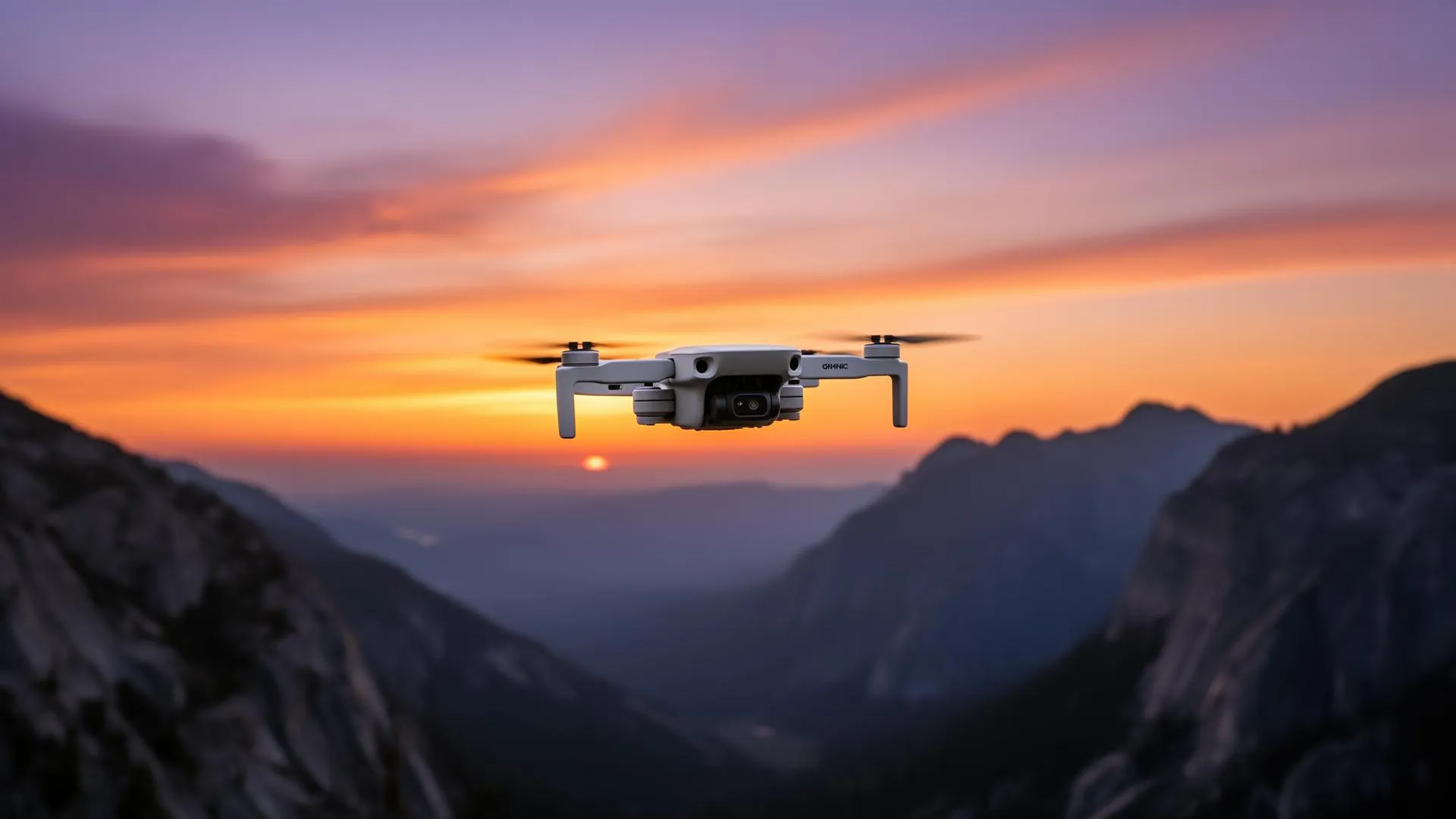
The DJI Mini 5 Pro answers a question the Mini line has chased for years: can a drone weighing under 250 grams carry a genuinely large camera sensor? The answer is yes. This is the first sub-250g DJI with a true 1-inch sensor, and it adds forward LiDAR, a 225° rotating gimbal, and up to 52 minutes of flight time. This review is for the buyer deciding whether the Mini 5 Pro is worth it over the still-excellent Mini 4 Pro, and, crucially, for anyone in the US trying to understand why they cannot simply buy one from DJI. No invented test logs, just the published specs that matter and an honest read on where this drone fits.
The one thing to know: the Mini 5 Pro is the most capable sub-250g drone DJI has ever made, with a 1-inch 50MP sensor, LiDAR-assisted night obstacle sensing, and class-leading flight time. The catch is availability. DJI is not selling it through official US channels, so American buyers face gray-market imports with region-locked warranties. If you are in Europe or another market where it sells normally, it is an easy recommendation. If you are in the US, read the availability section before you spend a cent.
Specifications at a glance
Every figure below comes from DJI's published specifications (DJI Mini 5 Pro spec sheet). The headline is the sensor: a 1-inch chip is roughly twice the surface area of the 1/1.3-inch sensor in the Mini 4 Pro, which is what makes the low-light and dynamic-range gains real rather than marketing.
| Spec | DJI Mini 5 Pro |
|---|---|
| Takeoff weight | 249.9 g (under the 250 g registration threshold) |
| Sensor | 1-inch CMOS, 50 MP |
| Lens | 24 mm equivalent, f/1.8, 84° field of view |
| Max video | 4K up to 120 fps, FHD up to 240 fps, 10-bit D-Log M and HLG, up to 14 stops DR |
| Gimbal | 3-axis, 225° rotation for true vertical shooting |
| Obstacle sensing | Omnidirectional vision + forward LiDAR + 3D infrared |
| Transmission | O4+, up to 20 km (FCC) / 10 km (CE) |
| Flight time | 36 min standard battery, up to 52 min with the Plus battery |
| Wind resistance | Up to 12 m/s |
| Internal storage | 42 GB + microSD |
| EU class | C0 standard, C1 with the Plus battery configuration |
The 1-inch sensor: the reason this drone exists
Sensor size is the single most important spec on any camera drone, and it is where the Mini 5 Pro makes its leap. Fitting a 1-inch 50MP CMOS into a 249.9 g airframe is a genuine engineering milestone, because larger sensors are heavier and physically harder to package next to a gimbal motor. The practical result is more light captured per frame, cleaner shadows, and wider dynamic range, the things that actually separate good aerial footage from flat, noisy clips. If you want the underlying theory on why this matters more than the megapixel number, our explainer on drone camera sensors walks through sensor size, aperture, and pixel pitch in plain terms.
Coming from the Mini 4 Pro's 1/1.3-inch chip, reviewers consistently describe the jump as substantial. Fstoppers measured roughly a 20 to 30 percent improvement in low-light performance and called it the point where DJI "finally struck the balance" between portability and professional image quality (Fstoppers review). The f/1.8 lens and up to 14 stops of dynamic range mean golden-hour and blue-hour clips hold detail that the Mini 4 Pro tends to crush into noise. The honest tradeoff: the larger sensor and faster lens introduce slightly shallower depth of field and a touch more moiré in fine repeating patterns, and the 48mm medium-tele crop mode does not support RAW. These are nitpicks for most users, but worth knowing if you pixel-peep.
Forward LiDAR: a sub-250g first that actually matters
The Mini 5 Pro is the first drone in this weight class to carry a forward-facing LiDAR sensor alongside omnidirectional vision sensing and 3D infrared. The reason this is more than a spec-sheet flex comes down to physics. Camera-based obstacle avoidance needs light to see, so it degrades sharply at dusk and at night, exactly when collisions are most likely. LiDAR measures distance with laser pulses and does not care about ambient light, so it keeps detecting obstacles, including thin hazards like power lines, in conditions where the Mini 4 Pro's camera-only system would force you to slow down or land.
This is the same safety philosophy DJI rolled out on the Air 3S, and it is the clearest functional upgrade over the previous Mini. One caveat reviewers flag: LiDAR coverage is forward-facing, not a full omnidirectional dome, so it sharpens front-facing night flights rather than turning the drone into an all-angle night flyer. Pair it with the 225° rotating gimbal and you get a Mini that is both safer and more creatively flexible, with true vertical 9:16 capture for social platforms without cropping into the frame.
Why the LiDAR helps
- • Detects obstacles in near-darkness
- • Picks up thin hazards like power lines
- • Works alongside omnidirectional vision
- • Safer automatic return-to-home at dusk
225° gimbal payoff
- • Native 9:16 vertical without cropping
- • Rotational and vortex-style moves
- • Smooth transitions between orientations
- • Built for short-form social content
Flight time and transmission: best in the Mini class
DJI rates the standard battery at 36 minutes and the optional Plus battery at up to 52 minutes. As with every manufacturer figure, those are hover numbers measured in ideal conditions. Real mixed flying with cruising, repositioning, and gimbal moves comes in lower: reviewers report roughly 20 to 25 usable minutes on the standard pack and closer to 40 minutes on the Plus battery (CineD launch coverage). Even discounted, that is the longest endurance ever offered in the Mini series. Note one important wrinkle for European buyers: the Plus battery pushes the takeoff weight above 250 g, which changes the EU class from C0 to C1 and removes the registration-free advantage that defines this category.
Flight time, realistically
Transmission runs on DJI's O4+ system, rated to 20 km (FCC) or 10 km (CE) with a stable HD feed. As always, that range is mostly academic because you are legally required to keep the drone within visual line of sight in nearly every jurisdiction. What matters in practice is link stability in congested radio environments, and O4+ holds up well in busy urban spectrum. The Mini's 12 m/s wind-resistance rating is also strong for the weight, though a 250 g airframe will always be more affected by gusts than a 700 g Air-class drone. If endurance and resilience are your priority, our broader piece on drone battery technology explains how chemistry, temperature, and storage affect real flight times.
The US availability caveat you must read first
This is the most important section for American readers. When DJI launched the Mini 5 Pro in September 2025, the press materials carried fine print stating it would not be available officially in the US market through DJI's own channels. This mirrors the situation with the Mavic 4 Pro earlier in 2025 and stems from a tangle of US customs enforcement and the FCC's national-security "Covered List," which blocks new foreign-made drones from receiving the equipment authorization needed to be legally imported, marketed, and sold in the US (DPReview).
In practice, units still reach US buyers through third-party resellers, often shipping from overseas via Amazon. That gray-market route comes with real downsides: DJI's warranty is region-locked to the country of purchase, so a drone imported through an unofficial channel may not be covered for repairs, and pricing fluctuates with tariffs and stock. Before buying, US pilots should also confirm their own legal obligations, including FAA registration and Remote ID. Our Remote ID compliance guide and overview of the FAA registration process cover what you are responsible for regardless of where the hardware came from. If the availability mess gives you pause, the officially sold Mini 4 Pro remains a strong alternative in the US.
Pricing and configurations
In markets where it sells normally, the Mini 5 Pro ships in several kits. European pricing (a useful reference point given the unofficial US situation) is around 799 EUR for the base kit with the screenless DJI RC-N3 controller, 999 EUR for the Fly More Combo with the RC-N3, and 1,129 EUR for the configuration with the screen-equipped DJI RC 2. US gray-market listings have appeared near 799 USD base and around 1,099 USD for the Fly More Combo, though those figures move with import conditions, so verify before buying.
For most buyers the Fly More Combo is the configuration worth getting: the extra batteries and charging hub turn a single short session into a full day of shooting, and the screen-equipped RC 2 removes the phone-and-cable workflow. If you are still weighing whether the whole purchase makes sense once you add accessories, insurance, and registration, our piece on whether buying a drone is worth it in 2026 breaks down the running costs beyond the sticker price.
Mini 5 Pro vs Mini 4 Pro: worth the upgrade?
The Mini 4 Pro is still a superb drone and remains officially available in the US, so the comparison matters. The table below uses published DJI specs for both.
| Spec | Mini 5 Pro | Mini 4 Pro |
|---|---|---|
| Sensor | 1-inch, 50 MP | 1/1.3-inch, 48 MP |
| Max video | 4K/120 | 4K/100 |
| Obstacle sensing | Vision + forward LiDAR | Omnidirectional vision only |
| Gimbal rotation | 225° (true vertical) | True vertical, fewer rotational modes |
| Flight time | 36 / 52 min | 34 / 45 min |
| US availability | Not official, gray-market only | Officially sold |
The honest verdict: if low-light image quality, night-flight safety, or the longest possible endurance are priorities, the Mini 5 Pro is a meaningful step up and the 1-inch sensor alone justifies it for serious creators. If you already own a Mini 4 Pro and shoot mostly in good light, the day-to-day difference is smaller than the spec gap suggests, and the Mini 4 Pro's official US availability and warranty may matter more than a sensor upgrade. For a wider look at how the Mini fits against other 2026 options, see our roundup of the best DJI drones.
Who the Mini 5 Pro is for
A great fit if you
- • Want the best image quality in a 250 g drone
- • Shoot travel, landscape, or low-light scenes
- • Value registration-free flying (C0, standard battery)
- • Create vertical short-form social content
- • Live in a market where it sells officially
Look elsewhere if you
- • Are in the US and want a covered warranty
- • Already own a Mini 4 Pro and shoot in good light
- • Need a second telephoto lens (Air 3 / Air 3S)
- • Want the absolute best stills (Mavic line)
- • Are on a tight beginner budget
The verdict
The DJI Mini 5 Pro is the most accomplished sub-250g drone yet made. The 1-inch sensor, forward LiDAR, 225° gimbal, and class-leading flight time genuinely raise the bar for what an ultralight can do. The only real asterisk is availability: outside the US it is an easy recommendation, but American buyers face a gray-market purchase and a region-locked warranty, which is a serious consideration on a drone at this price. Judge the hardware on its merits and it is excellent. Judge the buying experience in the US and you have to go in with eyes open.
Frequently asked questions
Can I buy the DJI Mini 5 Pro in the US?
Not through official DJI channels. DJI stated the Mini 5 Pro would not be sold officially in the US market, tied to customs enforcement and the FCC Covered List. Units appear via third-party resellers, often shipping from overseas through Amazon, but those carry a region-locked warranty that may not be honored in the US.
Is the Mini 5 Pro worth upgrading from the Mini 4 Pro?
If you need better low-light quality, night-flight LiDAR safety, or the longest flight time, yes. The 1-inch sensor is a real step up over the Mini 4 Pro's 1/1.3-inch chip. If you shoot mostly in good light and already own a Mini 4 Pro, the everyday difference is smaller than the spec list implies.
Does the Mini 5 Pro need to be registered?
With the standard battery it stays at 249.9 g (EU class C0), so it avoids the sub-250 g registration threshold in many places, though operator registration and Remote ID rules can still apply. The Plus battery pushes weight above 250 g and into EU class C1. US pilots should review their FAA and Remote ID obligations regardless.
What is the realistic flight time per battery?
DJI's 36-minute (standard) and 52-minute (Plus) ratings are hover figures in ideal conditions. In normal mixed flying expect roughly 20 to 25 minutes on the standard battery and around 40 minutes on the Plus battery. The Fly More Combo's extra batteries make all-day sessions practical.
How good is the LiDAR for night flying?
The forward LiDAR meaningfully improves obstacle detection in low light, including thin hazards like power lines, where camera-only systems struggle. It is forward-facing rather than fully omnidirectional, so it sharpens front-facing night flights rather than turning the Mini into an all-angle night flyer.
Is the 225° gimbal useful for everyday shooting?
Yes, especially for social content. The 225° rotation enables true 9:16 vertical capture without cropping the frame, plus rotational and vortex-style moves that the Mini 4 Pro cannot do. For landscape and travel work it also adds creative framing flexibility.
This review is based on DJI's published specifications and reputable third-party reporting. It is not sponsored by DJI, and the site may earn an affiliate commission on purchases made through retailer links. Specifications, pricing, and US availability verified June 2026.
Frequently Asked Questions
Can I buy the DJI Mini 5 Pro in the US?
Not through official DJI channels. DJI stated the Mini 5 Pro would not be sold officially in the US market, tied to customs enforcement and the FCC Covered List. Units appear via third-party resellers shipping from overseas, but those carry a region-locked warranty that may not be honored in the US.
Is the Mini 5 Pro worth upgrading from the Mini 4 Pro?
If you need better low-light quality, night-flight LiDAR safety, or longer flight time, yes. The 1-inch sensor is a real step up over the Mini 4 Pro's 1/1.3-inch chip. If you shoot mostly in good light and already own a Mini 4 Pro, the everyday difference is smaller than the spec gap suggests.
Does the Mini 5 Pro need to be registered?
With the standard battery it stays at 249.9 g (EU class C0), avoiding the sub-250 g threshold in many places, though operator registration and Remote ID rules can still apply. The Plus battery pushes weight above 250 g and into EU class C1. US pilots should review their FAA and Remote ID obligations regardless.
What is the realistic flight time per battery?
DJI's 36-minute (standard) and 52-minute (Plus) ratings are hover figures in ideal conditions. In normal mixed flying expect roughly 20 to 25 minutes on the standard battery and around 40 minutes on the Plus battery.