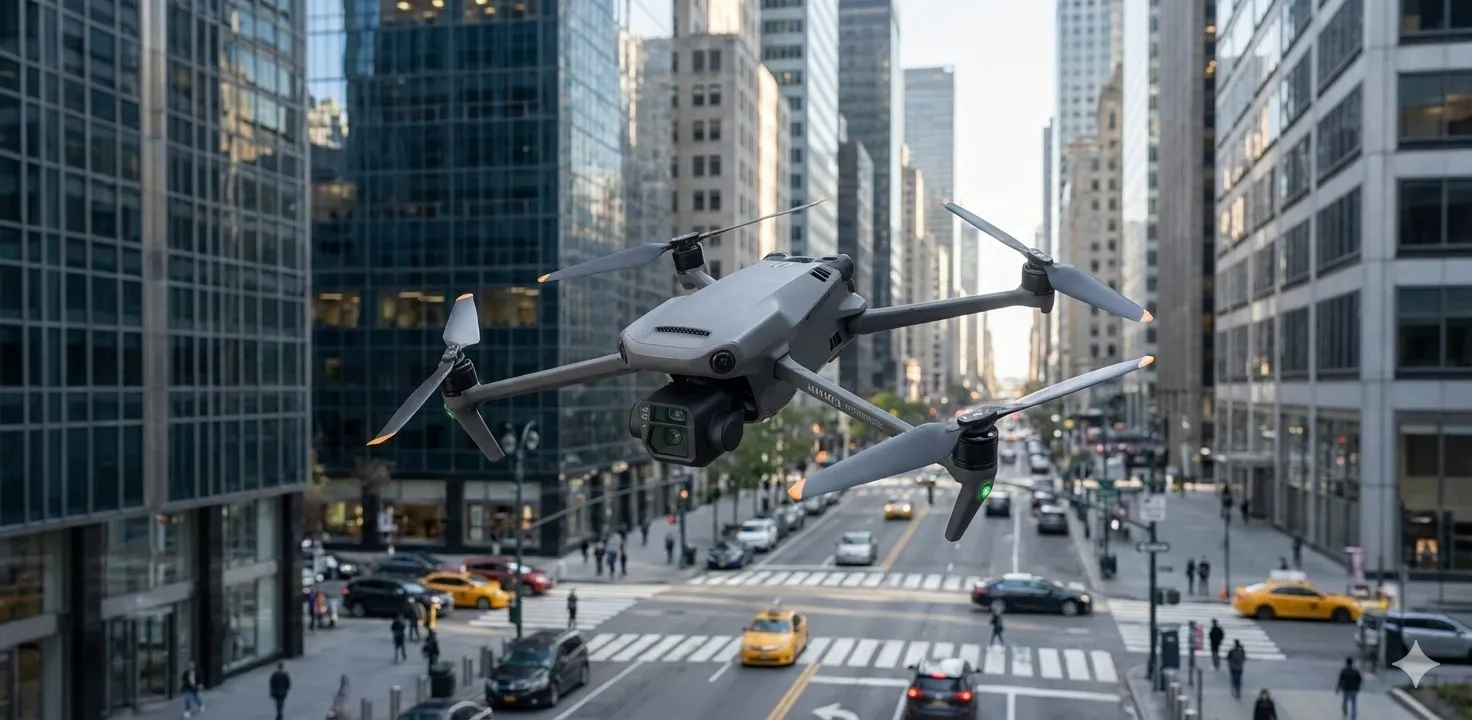
DJI still makes the drones almost everyone else is measured against, but the lineup has quietly become confusing: there are now palm-sized 135g flyers, sub-250g pocket drones with 1-inch sensors, dual- and triple-camera prosumer aircraft, and immersive FPV machines, all wearing similar names. This guide cuts through that. It is organized by what you actually want to do (travel light, shoot professionally, learn to fly, or chase the FPV thrill) with one clear pick per use case, the specs that justify it, current 2026 pricing, and honest notes on where each drone falls short. No fake "I flew this for six months" claims, just accurate specs, real reviews, and a frank read on value.
The one thing to know: there is no single "best DJI drone," there is a best drone for your budget and use case. If you want one safe recommendation that covers the most ground, the DJI Air 3S is the do-everything pick for most serious hobbyists. If portability and skipping registration matter most, the Mini 5 Pro wins. For uncompromising image quality, the Mavic 4 Pro. To simply learn to fly cheaply, the Neo. Pick the job first, then the drone.
Quick picks by use case
Best overall
DJI Air 3S
1-inch wide sensor, dual camera, LiDAR night sensing, 45-min flight time
Best sub-250g
DJI Mini 5 Pro
First 1-inch sensor Mini, under 250g, no registration in most regions
Best for creators / pro
DJI Mavic 4 Pro
100MP Hasselblad 4/3 sensor, triple camera, 6K HDR, 51-min flight
Best budget / beginner
DJI Neo
From $149, 135g, palm takeoff, controller-free, AI tracking
Best value sub-250g
DJI Mini 4 Pro
Now discounted, omnidirectional sensing, 34-min flight, true 4K vertical
Best FPV
DJI Avata 2
Immersive goggles, cinewhoop safety, beginner-friendly acrobatics
How we chose: the criteria that matter
A spec sheet alone does not tell you whether a drone is worth buying. The picks below weigh four things that genuinely change the day-to-day experience. Sensor size and image quality come first, because a larger sensor gathers more light and holds detail in shadows and at dusk, which matters far more than the megapixel number on the box (our explainer on drone camera sensors breaks down why). Weight class is next: anything at or under 249g sidesteps a great deal of registration paperwork in many countries, while heavier drones unlock bigger sensors but bring more rules. Flight time and transmission decide how relaxed a shooting session feels, and safety systems (obstacle sensing, return-to-home, and increasingly LiDAR) separate a forgiving drone from a stressful one. Price guidance throughout reflects DJI's published 2026 figures, which move with frequent discounts.
DJI lineup at a glance
| Drone | Best for | Main sensor | Flight time | Weight | From (USD) |
|---|---|---|---|---|---|
| Air 3S | Best overall | 1" wide + 1/1.3" tele | 45 min | 724 g | $1,099 |
| Mavic 4 Pro | Creators / pro | 4/3 Hasselblad, 100MP | 51 min | ~1,063 g | $2,199 |
| Mini 5 Pro | Sub-250g flagship | 1" CMOS, 50MP | 35 min | ~249 g | $759 |
| Mini 4 Pro | Value sub-250g | 1/1.3" CMOS, 48MP | 34 min | <249 g | $759 |
| Avata 2 | FPV flying | 1/1.3" CMOS, 12MP | 23 min | 377 g | $999 combo |
| Neo | Budget / beginner | 1/2" CMOS, 12MP | 18 min | 135 g | $149 |
Figures are drawn from DJI's official specification pages and store listings (linked in each section). Flight-time numbers are DJI's rated hover figures and will be lower in real mixed flying. Pricing is the lowest current US configuration as of mid-2026 and changes often with promotions.
Best overall: DJI Air 3S
The DJI Air 3S hits the sweet spot most buyers actually need. It keeps the dual-camera idea (a 24mm wide and a 70mm telephoto, both genuinely useful focal lengths) but upgrades the wide camera to a proper 1-inch, 50MP sensor with up to 14 stops of dynamic range. The headline addition is forward-facing LiDAR, which lets the obstacle sensing work in near-darkness, something earlier Air drones could not do. You also get up to 45 minutes of flight time, 4K/120 video, and DJI's O4 transmission. It is the first drone in this lineup that feels like it has no obvious weakness for a hobbyist.
Strengths
- • 1-inch wide sensor with strong low-light performance
- • Two real focal lengths (24mm + 70mm) in one airframe
- • LiDAR night obstacle sensing, rare at this price
- • 45-minute rated flight time and reliable O4 transmission
Limitations
- • At 724g it needs full registration everywhere
- • Telephoto keeps the smaller 1/1.3-inch sensor
- • Bigger and pricier than the Mini line
- • Mavic 3/4 still beat it on outright stills quality
Pricing starts around $1,099 for the base model and $1,399 for the Fly More Combo. The combo is the one worth buying because the extra batteries and charging hub turn a single short outing into a full afternoon of shooting. If you are deciding between this and its cheaper, smaller-sensored predecessor, our DJI Air 3 review explains exactly where the daytime gap is small enough to save money. Who it is for: the serious enthusiast who wants one drone to cover travel, real estate, landscape, and the occasional dusk shoot without buying two aircraft.
Best sub-250g: DJI Mini 5 Pro
For years the trade-off with sub-250g drones was clear: you got the lighter regulatory burden, but a smaller sensor. The DJI Mini 5 Pro ends that compromise by squeezing a 1-inch, 50MP sensor into a body that still weighs roughly 249g. That is a meaningful jump in image quality over every previous Mini. It also adds omnidirectional obstacle sensing that DJI rates down to 1 lux, a 225-degree gimbal for flexible angles, and 4K/100fps capture, with a rated 35-minute flight time on the standard battery (DJI quotes up to 52 minutes on the larger Battery Plus, which pushes it over 249g). For travelers who refuse to choose between portability and quality, this is the drone.
Why the 250g line matters
Staying at or below 249g keeps you in the lowest-friction category in most jurisdictions. In the EU it is the C0 open-category sweet spot with minimal restrictions, and in many countries you skip aircraft registration entirely (you may still need to register as an operator and pass a basic test). It does not make you exempt from no-fly zones, line-of-sight rules, or Remote ID where it applies. Always check local rules first: our drone regulations hub covers the major markets.
The Mini 5 Pro starts around $759 for the base kit, with Fly More Combos from about $959 to $1,159 depending on controller and battery count. Who it is for: travelers, hikers, and anyone who wants the smallest, lowest-hassle drone that still produces footage you would happily publish. If your budget is tighter, the next pick is the smarter buy.
Best value sub-250g: DJI Mini 4 Pro
With the Mini 5 Pro out, the DJI Mini 4 Pro has become the value play in the sub-250g class. It uses a 1/1.3-inch, 48MP sensor rather than a 1-inch chip, so it gives up some low-light headroom, but it keeps the features that made it a hobbyist favorite: full omnidirectional obstacle sensing (a genuine rarity in a sub-250g drone), true vertical 4K shooting for social video, ActiveTrack 360, and a 34-minute rated flight time (up to 45 minutes on the Battery Plus, which lifts it past 249g). At a base price now sitting around $759 and frequently discounted below that, it delivers most of the Mini experience for less. Read the full breakdown in our DJI Mini 4 Pro review. Who it is for: the budget-conscious beginner-to-intermediate pilot who wants safe, capable sub-250g flying and can live without a 1-inch sensor.
Best for creators and professionals: DJI Mavic 4 Pro
The DJI Mavic 4 Pro is the flagship, and it shows. The Hasselblad main camera uses a Four Thirds (4/3) sensor capable of 100MP stills and up to 6K/60fps HDR video with a quoted 15.5 stops of dynamic range, the most capable consumer camera DJI sells. It is a triple-camera system (28mm wide, 70mm and 168mm telephoto), adds an "Infinity Gimbal" with 360-degree rotation and 70-degree upward shooting, includes forward LiDAR for low-light obstacle sensing, and is rated for up to 51 minutes of flight on O4+ transmission reaching 30km. This is the tool for people whose footage pays the bills.
The catch is price: it starts at $2,199 and climbs quickly with combos and the Creator configuration. It is also large and requires full registration. For most enthusiasts that is overkill, and the Air 3S delivers a large share of the experience for half the money. But if you shoot real estate, commercial, or cinema work where image quality and gimbal flexibility translate directly into income, nothing else in the lineup matches it. See the deep dive in our DJI Mavic 4 Pro review. Who it is for: working professionals and serious creators who need the best stills and video DJI offers and will use the headroom.
Best budget and beginner pick: DJI Neo
The DJI Neo is the lowest-risk way to start flying. At just 135g with built-in propeller guards, it takes off from your palm, tracks you automatically, and can be flown without a controller at all using the phone app or voice. It records 4K/30fps with electronic stabilization, and while flight time is a modest 18 minutes per battery, the price is the headline: it starts at just $149, with multi-battery combos around $219. Crucially, the Neo also scales up, with optional motion controllers and goggles it becomes a gateway into FPV-style flying, so beginners can grow into it.
Do not expect Mini-class image quality or wind resistance; the small sensor and light weight show their limits in breezy conditions and dim light. But as a first drone, a crash-tolerant trainer, or a pocketable selfie flyer, the value is hard to argue with. If you are still unsure whether buying makes sense for occasional use, our guide on renting versus buying a drone in 2026 is worth a read first. Who it is for: absolute beginners, kids-plus-parents, vloggers wanting a follow-cam, and anyone testing the hobby before spending more.
Best FPV: DJI Avata 2
FPV (first-person view) flying is a different sport: you wear goggles and feel like you are inside the aircraft. The DJI Avata 2 is the most approachable way in. It is a cinewhoop, meaning built-in propeller guards make it safer to fly low, close to subjects, and even indoors. It shoots up to 4K/60fps (and 4K/100 in some modes) from a 1/1.3-inch sensor with a 155-degree ultrawide field of view, pairs with DJI Goggles 3 and the Motion Controller for intuitive one-handed flight, and offers one-push acrobatics for flips and rolls without manual stick skill. Flight time is a short 23 minutes, normal for FPV, and O4 transmission reaches up to 13km.
Pricing for the Fly More Combo (which includes the goggles and controller you need) has fallen to roughly $999, and bundles have hit record lows in 2026. The Avata 2 will not satisfy hardcore racers who build their own rigs, but for cinematic FPV and for learning the discipline safely, it is the obvious starting point. If you want to compare the immersive hardware itself, see our roundup of the best FPV goggles for 2026. Who it is for: creators chasing dynamic, immersive shots and newcomers who want to try FPV without building a drone from parts.
A note on US availability and the FCC situation
US buyers should understand the current import picture. In December 2025 the FCC added all foreign-made drones, DJI included, to its Covered List, which blocks new models from receiving the equipment authorization needed for normal US import going forward (DroneLife report). The practical effect as of mid-2026: every drone already authorized and in the country remains fully legal to buy, own, and fly, and existing inventory continues to sell. What is uncertain is the long-term supply of future models and how quickly stock of current ones lasts. None of this changes how you operate the drone, but it is a reason not to wait indefinitely if you have your eye on a specific model. Outside the US, availability is unaffected.
Still narrowing it down?
A few more resources to help you decide and fly legally:
The bottom line
If you want a single safe choice, the Air 3S is the best all-rounder for most serious hobbyists: it has the fewest weaknesses. Travelers who value going small should take the Mini 5 Pro (or the cheaper Mini 4 Pro), professionals should stretch to the Mavic 4 Pro, complete beginners should start cheap with the Neo, and anyone curious about immersive flight should pick the Avata 2. Decide what you will actually shoot, then match the drone to the job rather than the other way around.
Frequently asked questions
Which DJI drone is best for most people in 2026?
The DJI Air 3S is the best all-rounder for serious hobbyists: a 1-inch wide sensor, a useful 70mm telephoto, LiDAR night obstacle sensing, and around 45 minutes of flight time. If you prioritize portability and skipping registration, the sub-250g Mini 5 Pro is the better fit.
Which DJI drone should a complete beginner buy?
The DJI Neo, from $149, is the cheapest and most forgiving entry point: 135g, palm takeoff, propeller guards, and controller-free flight. If you want a beginner drone you will not outgrow quickly, the Mini 4 Pro adds a real camera, obstacle sensing, and longer flight time for more money.
Do I have to register a DJI drone?
It depends on weight and country. Drones over 250g (Air 3S, Mavic 4 Pro, Avata 2) require registration almost everywhere. Sub-250g drones like the Mini 5 Pro and Mini 4 Pro skip aircraft registration in many regions, though you may still need to register as an operator and follow Remote ID rules. Check your local regulations before flying.
Are DJI drones still legal to buy in the US?
Yes. As of mid-2026, DJI drones already authorized and in the US are fully legal to buy, own, and operate. The December 2025 FCC Covered List action blocks new foreign-made models from future import, but it does not ban existing inventory or affect how you fly the drone you have.
Mini 5 Pro or Mini 4 Pro: which sub-250g drone should I get?
Get the Mini 5 Pro if you want the best image quality in a sub-250g body thanks to its 1-inch sensor, and the Mini 4 Pro if you want to save money and can accept a smaller 1/1.3-inch sensor. Both keep omnidirectional obstacle sensing and excellent flight times.
Is the Mavic 4 Pro worth more than double the Air 3S?
Only if you need it. The Mavic 4 Pro's 100MP Four Thirds Hasselblad sensor, triple camera, and Infinity Gimbal are aimed at professionals whose footage earns money. For most enthusiasts the Air 3S delivers a large share of the capability for roughly half the price.
This guide is based on DJI's published specifications and reputable third-party reporting, not sponsored content. The site may earn an affiliate commission on purchases made through retailer links. Specifications and prices verified June 2026 and subject to change.
Frequently Asked Questions
Which DJI drone is best for most people in 2026?
The DJI Air 3S is the best all-rounder for serious hobbyists, with a 1-inch wide sensor, a 70mm telephoto, LiDAR night obstacle sensing, and about 45 minutes of flight time. If portability and skipping registration matter most, the sub-250g Mini 5 Pro is the better fit.
Which DJI drone should a complete beginner buy?
The DJI Neo, from $149, is the cheapest and most forgiving entry point: 135g, palm takeoff, propeller guards, and controller-free flight. For a beginner drone you will not outgrow quickly, the Mini 4 Pro adds a real camera, obstacle sensing, and longer flight time.
Do I have to register a DJI drone?
It depends on weight and country. Drones over 250g (Air 3S, Mavic 4 Pro, Avata 2) require registration almost everywhere. Sub-250g drones like the Mini 5 Pro and Mini 4 Pro skip aircraft registration in many regions, though you may still need to register as an operator and follow Remote ID rules.
Are DJI drones still legal to buy in the US?
Yes. As of mid-2026, DJI drones already authorized and in the US are fully legal to buy, own, and operate. The December 2025 FCC Covered List action blocks new foreign-made models from future import, but it does not ban existing inventory or affect how you fly the drone you already have.