
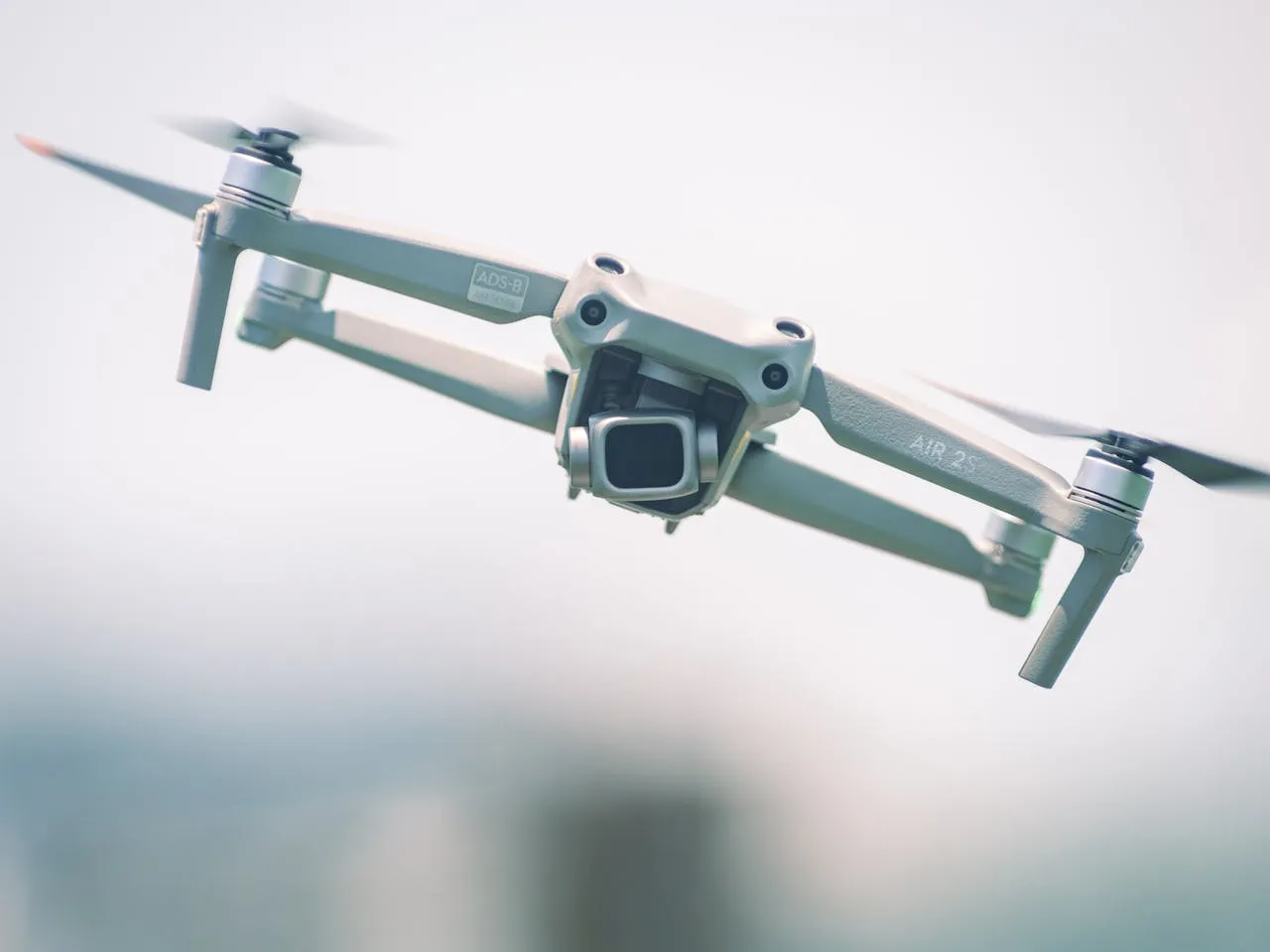
The DJI Air 2S was, for a couple of years, the easiest drone in the world to recommend. It put a 1-inch sensor and 5.4K video into a sub-600-gram folding body at a price that undercut everything with comparable image quality. This review is for the person eyeing one in 2026, almost always on the used market now, trying to work out whether a five-year-old drone still earns its keep, or whether the money is better spent on a current model like the Air 3S. No nostalgia, just the specs that matter, an honest read on what has aged, and a clear answer on who should still buy it.
The one thing to know: the Air 2S is discontinued and no longer sold new by DJI, but its 1-inch, 20MP sensor still shoots cleaner daylight stills and 5.4K footage than most drones in its used price band. If you can find a clean used unit (Fly More Combos hover around the high-600s to high-800s USD) and you fly mostly in open spaces, it is a genuine bargain. What it lacks is omnidirectional obstacle sensing, a second lens, and the long flight times that modern drones treat as standard.
Specifications at a glance
Every figure below is taken from DJI's published specifications (DJI Air 2S support page), with the Air 3S column drawn from the current (DJI Air 3S spec sheet) so you can see exactly how the gap has widened.
| Spec | DJI Air 2S | DJI Air 3S |
|---|---|---|
| Main sensor | 1-inch CMOS, 20MP | 1-inch CMOS, 50MP |
| Cameras | Single, 22mm equiv. | Dual, 24mm + 70mm |
| Max video | 5.4K/30, 4K/60 | 4K/120 |
| Takeoff weight | 595 g | 724 g |
| Max flight time | 31 min | 45 min |
| Transmission | O3, 12 km (FCC) / 8 km (CE) | O4, 20 km (FCC) / 10 km (CE) |
| Obstacle sensing | 4-directional | Omnidirectional + LiDAR |
Air 2S airframe and camera, in detail
180 × 97 × 77 mm
19 m/s (S-mode)
88°
12-bit RAW (DNG)
10-bit D-Log
8 GB + microSD
The 1-inch sensor: what made it a classic
When the Air 2S launched in April 2021, the headline was simple: a 1-inch, 20MP CMOS sensor in a drone you could fold into a jacket pocket. At the time, that class of sensor lived in the much larger and pricier Mavic 2 Pro. Dropping it into the compact Air body, at roughly half the cost, is what made this drone a genuine inflection point. DPReview called it "the ultimate consumer drone" on release, and the praise was about exactly this: image quality that punched far above the price tag (DPReview).
Sensor size is the part of a camera spec that ages most gracefully, and it is why the Air 2S is still worth discussing in 2026. A larger sensor gathers more light per pixel, which translates to cleaner shadows, wider dynamic range, and more usable detail when the light gets tricky. The 1-inch chip here, with 2.4-micron pixels and a rated 12 stops of dynamic range, still outresolves and out-shadows the tiny 1/2-inch sensors in budget and Mini-class drones. If you want to understand why this matters more than the megapixel number on the box, our explainer on drone camera sensors walks through the physics in plain language.
On the video side, the Air 2S records 5.4K up to 30fps (5472 × 3078) and 4K up to 60fps, with a 10-bit D-Log profile for graders and 12-bit RAW for stills. DJI's colour science was already mature here: files come off the card clean, skin tones are natural, and you can crop into 5.4K footage to fake a tighter framing while still delivering a sharp 4K master. That extra resolution headroom is one of the quiet reasons the footage still holds up against newer 4K-only drones.
Flight, transmission, and the obstacle-sensing caveat
DJI rates the Air 2S at 31 minutes per battery, measured in ideal hovering conditions. Real mixed flying lands closer to the mid-20s, which was competitive in 2021 but feels short in 2026 now that drones in the same family push past 40 minutes. For a casual session over a beach or a field, 31 minutes is plenty. For paid work where you need many passes per location, you will be swapping batteries more often than you would on a current model, so a multi-battery kit is close to mandatory.
Transmission runs on DJI's O3 system, rated to 12 km (FCC) or 8 km (CE) with a 1080p feed. The headline range is mostly academic, since you are legally required to keep the drone within visual line of sight nearly everywhere, but O3 remains stable and reliable in normal use. It is a generation behind the O4 link on current drones, which holds up better in congested urban radio environments, though for open-area flying you are unlikely to notice the difference.
The real caveat, and the place age shows most, is obstacle sensing. The Air 2S has 4-directional sensing: forward, backward, upward, and downward. It has no side sensors. In 2021 that was solid. In 2026, with full omnidirectional sensing standard across the mid-range and LiDAR night sensing on the Air 3S, those blind spots on the sides matter. For open-field and coastline flying it is rarely an issue. For threading between trees, flying in tight urban canyons, or actively tracking a moving subject that swings to the side, you have to fly with more care than a newer drone would demand.
Flight time, realistically
Honest 2026 status: discontinued, and a used-only proposition
Let us be clear about where this drone stands. The Air 2S has been discontinued and is no longer sold new through DJI's own store in most regions, where the product page now returns a "not available" notice. Its lineage moved on through the Air 3 (which added a second 70mm lens) and the current Air 3S (which keeps that telephoto and restores a 1-inch wide sensor with forward LiDAR). DJI still publishes a support page and firmware for the Air 2S, so it is not abandoned, but you are buying a sunset product, not a current one.
That makes the Air 2S a used-market and refurbished proposition. Pricing moves with stock, but reputable used dealers list Fly More Combos in roughly the high-600s to high-800s USD range, with bare units sometimes a little less when in stock (MPB used listings). When buying used, prioritise a unit with low cycle-count batteries (LiPo packs degrade with age and cycles regardless of how the drone looks), inspect the gimbal ribbon and arms, and confirm the seller has removed the drone from their DJI account. Always verify current prices before committing, because a clean used Air 2S only makes sense when it is meaningfully cheaper than a new entry-level current-gen drone. Our breakdown of whether buying a drone is worth it in 2026 covers the running costs that come after the purchase.
Air 2S vs Air 3S: who should step up
The Air 3S is the spiritual successor and the comparison that decides most purchases. It keeps a 1-inch wide sensor but moves to 50MP, adds a second 70mm telephoto camera for true optical reach, jumps to 4K/120 video, runs O4 transmission, extends flight time to 45 minutes, and adds omnidirectional sensing plus forward LiDAR for genuine low-light obstacle avoidance. At a base price around 1,099 USD (DJI Air 3S store page), it is a substantially more capable and safer aircraft, and it is the right call for anyone flying in complex environments, shooting near dusk, or doing client work where reliability and a second focal length pay for themselves.
The case for the Air 2S is narrower but real. If your flying is daytime, open-area, image-quality-first, and budget-constrained, the older drone delivers stills and 5.4K footage that hold up remarkably well for a fraction of the Air 3S price. You give up the telephoto lens, side and night sensing, and a third more flight time. For a hobbyist or a photographer who wants a true 1-inch sensor without spending four figures, that trade can absolutely make sense. If you would rather see the full current lineup before deciding, our best DJI drones guide ranks every model by use case, and you can browse more model breakdowns in our drone reviews hub.
Who the Air 2S is for in 2026
A smart buy if you
- • Want a true 1-inch sensor on a tight budget
- • Fly mostly in open spaces (fields, coast, hills)
- • Prioritise daylight image quality over gadgets
- • Can find a clean, low-cycle used unit
- • Shoot 5.4K and value the crop headroom
Step up to the Air 3S if you
- • Fly in forests, cities, or tight spaces often
- • Shoot near dusk or want LiDAR night sensing
- • Want a second 70mm telephoto lens
- • Need 40-plus minutes of flight time
- • Do paid work where reliability matters
The verdict
The Air 2S earned its reputation honestly: a 1-inch sensor and 5.4K video in a pocketable body was a milestone, and the image quality still holds up in good light. In 2026 it is a discontinued, used-only buy, and the missing side sensors plus shorter flight time are real limitations next to a current drone. But at used prices well below a new Air 3S, for a daylight, open-area shooter who cares about image quality first, it remains one of the best value-per-dollar 1-inch drones you can get.
Frequently asked questions
Is the DJI Air 2S still worth buying in 2026?
Yes, but only used and only for the right pilot. Its 1-inch, 20MP sensor still delivers excellent daylight stills and 5.4K video that beats most drones in its used price band. If you fly mainly in open spaces and want image quality on a budget, it is a strong buy. If you need side and night obstacle sensing or longer flight time, step up to the Air 3S.
Is the DJI Air 2S discontinued?
Yes. DJI no longer sells the Air 2S new through its own store in most regions, having moved the line forward through the Air 3 and Air 3S. DJI still maintains a support page and firmware for it, so it is supported but no longer current. Buying one in 2026 means the used or refurbished market.
Air 2S or Air 3S, which should I buy?
Buy the Air 3S new if you want a current drone with a second 70mm lens, 4K/120, omnidirectional plus LiDAR night sensing, and 45-minute flight time, especially for complex or paid flying. Buy the Air 2S used if you want a true 1-inch sensor for far less money and fly mostly in open daylight conditions.
What should I check when buying a used Air 2S?
Prioritise low battery cycle counts (LiPo packs degrade with age and cycles), inspect the gimbal ribbon, arms, and props for wear, run the latest firmware, and make sure the seller has unlinked the drone from their DJI account. Buying from a reputable used dealer with a warranty period is safer than a private sale.
Does the DJI Air 2S need to be registered?
Yes. At 595 g it is well above the 250 g threshold everywhere. US pilots register with the FAA, and the Air 2S is Remote ID compliant. See our walkthrough of the FAA registration process for the current steps and costs.
What is the realistic flight time per battery?
DJI's 31-minute rating is a hover figure in ideal conditions. In normal mixed flying expect the mid-20s, dropping toward the low 20s in sport mode or wind. A multi-battery kit is close to essential for any real shooting session, since aged used batteries also hold less charge.
This review is based on DJI's published specifications and reputable third-party reporting. It is not sponsored by DJI, and the site may earn an affiliate commission on purchases made through retailer links. Specifications and pricing verified June 2026.
Frequently Asked Questions
Is the DJI Air 2S still worth buying in 2026?
Yes, but only used and for the right pilot. Its 1-inch, 20MP sensor still delivers excellent daylight stills and 5.4K video that beats most drones in its used price band. Step up to the Air 3S if you need side and night obstacle sensing, a second lens, or longer flight time.
Is the DJI Air 2S discontinued?
Yes. DJI no longer sells it new in most regions, having moved the line forward through the Air 3 and Air 3S. It still receives support and firmware, but buying one in 2026 means the used or refurbished market.
Air 2S or Air 3S, which should I buy?
Buy the Air 3S new for a current drone with a 70mm second lens, 4K/120, omnidirectional plus LiDAR night sensing, and 45-minute flight time. Buy the Air 2S used for a true 1-inch sensor at a much lower price if you fly mostly in open daylight conditions.
Does the DJI Air 2S need to be registered?
Yes. At 595 g it is well above the 250 g threshold everywhere. US pilots register with the FAA and the drone is Remote ID compliant. Check our FAA registration guide for the current steps and costs.