
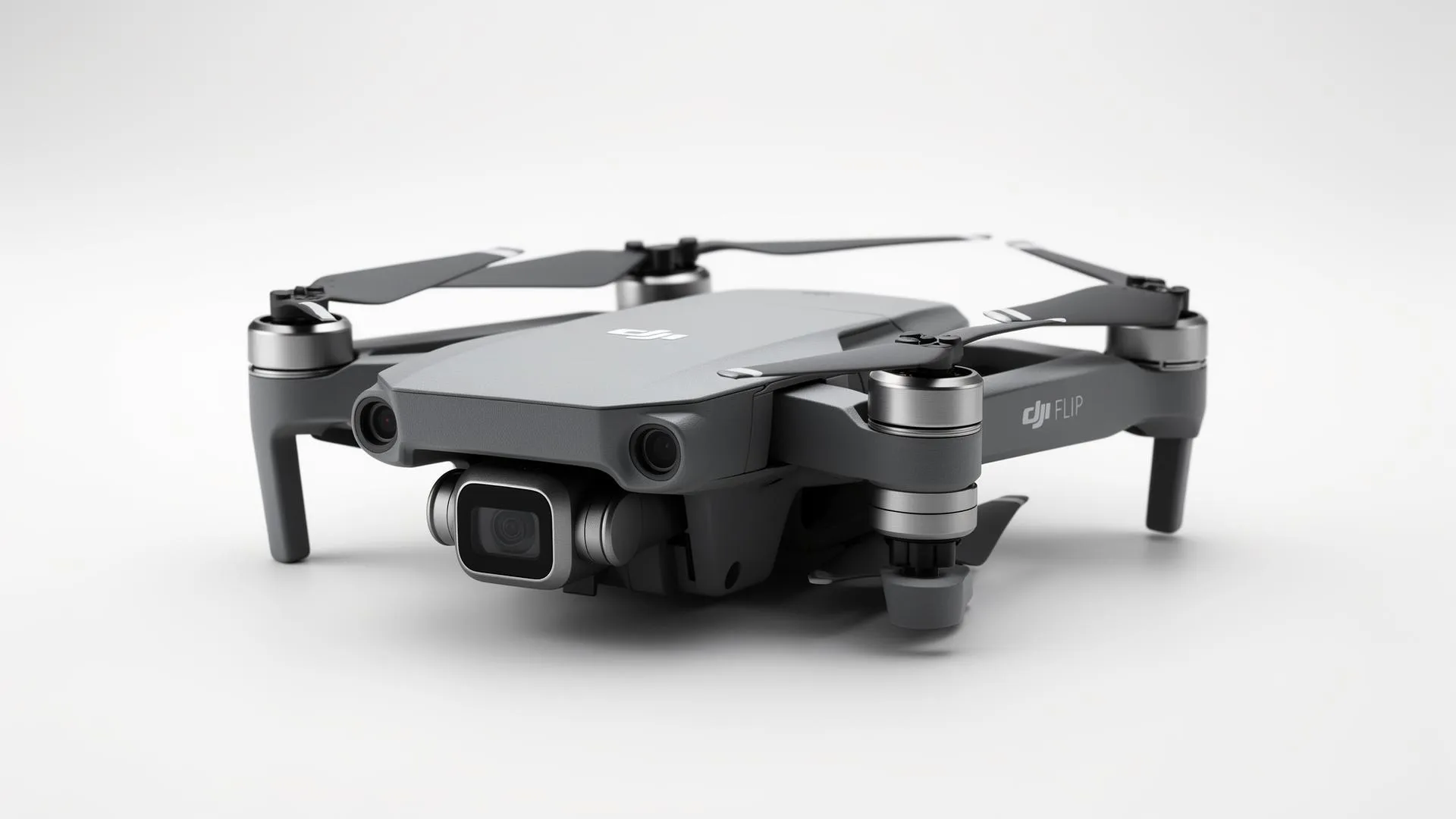
These two sit at the entry point of DJI's lineup, yet they answer completely different questions. The DJI Flip is a foldable, sub-250g camera drone built around a large 1/1.3-inch sensor and a proper 3-axis gimbal. The DJI Neo 2 is a 151g palm-launch follow-me drone designed to film you, hands-free, with no controller required. This comparison is for the buyer trying to decide whether they want a small drone that takes serious footage, or a tiny autonomous camera that keeps up with the action. No invented hands-on claims here, just the published DJI specs that matter, honest analysis, and a clear note on a detail that trips up a lot of US readers.
The one thing to know: the Flip is the better camera and the longer-flying drone thanks to its bigger sensor and 3-axis gimbal, while the Neo 2 is the lighter, safer-feeling, hands-free option that anyone can fly out of the box. There is one major catch: as of mid-2026 the Neo 2 is not officially sold in the United States, whereas the Flip is. For US buyers that often settles the question before specs even enter the picture.
Side-by-side specifications
Every figure below is taken from DJI's own published specifications (Flip spec sheet, Neo 2 spec sheet). Note that several details changed with the Neo 2 generation, including a smaller takeoff weight, a 2-axis gimbal, and a much more capable obstacle-sensing system than the original Neo.
| Feature | DJI Flip | DJI Neo 2 |
|---|---|---|
| Takeoff weight | Under 249 g | 151 g (160 g with transmitter) |
| Folded size | 136 × 62 × 165 mm | 147 × 171 × 41 mm (non-folding) |
| Sensor | 1/1.3" CMOS, 48 MP | 1/2" CMOS, 12 MP |
| Gimbal | Mechanical 3-axis | Mechanical 2-axis + EIS |
| Max video | 4K/60fps HDR, 10-bit D-Log M | 4K up to 100fps |
| Max flight time | 31 minutes | 19 minutes |
| Transmission / range | O4, 13 km (FCC) / 8 km (CE) | Wi-Fi (O4 via add-on transmitter) |
| Obstacle sensing | Forward 3D infrared + downward | Omnidirectional vision + forward LiDAR + downward |
| Palm launch / hands-free | Yes (palm takeoff) | Yes, core design |
| Starting price | From 439 EUR / 439 USD (RC-N3) | From 239 EUR (drone only) |
| US availability (mid-2026) | Yes | Not officially sold |
Two different ideas about what a small drone is for
The temptation is to read the table as "Flip wins on most rows, so the Flip is better." That misses the point. These drones are designed around opposite priorities, and the right answer depends on how you actually intend to use one.
DJI Flip: a real camera drone that folds into a bag
The Flip is the more conventional aircraft of the two. It folds down to roughly the footprint of a chunky phone, weighs under 249 g (which keeps it in the lightest regulatory category in many countries), and uses full-coverage propeller guards that make it safe to launch from your hand. Crucially, it carries a proper mechanical 3-axis gimbal and a large 1/1.3-inch sensor, the same sensor class DJI uses in the Mini 4 Pro. That hardware is the reason its footage looks a clear step above what you get from the Neo 2.
The Flip is built for deliberate shooting. You can fly it from the bundled DJI RC-N3 controller (phone attached) or the screen-equipped DJI RC 2, frame shots yourself, and lean on its longer 31-minute flight time and 13 km O4 transmission to actually go somewhere and compose. It is a drone for people who want to make footage, not just appear in it.
DJI Neo 2: an autonomous camera that flies itself
The Neo 2 takes the opposite approach. At 151 g it is barely larger than your palm, does not fold (it does not need to), and is built to launch from your hand, find you, and follow automatically. The big generational story here is safety: the original Neo had downward sensing only, while the Neo 2 adds an omnidirectional monocular vision system plus a forward LiDAR sensor and downward infrared. That makes it DJI's lightest drone with all-around obstacle sensing, which matters a lot for a drone meant to chase moving subjects through trees and clutter.
The trade-off is the camera. The Neo 2 uses a smaller 1/2-inch 12 MP sensor and a 2-axis mechanical gimbal that relies on electronic stabilization to smooth out the third axis. It shoots 4K, and the footage is genuinely good for social media, but it does not have the dynamic range, low-light headroom, or 10-bit grading flexibility of the Flip. If you want to understand exactly why the sensor gap matters, our explainer on drone camera sensors covers why sensor size beats megapixel count almost every time.
Camera and footage: the Flip's clearest win
This is where the gap is widest. The Flip's 1/1.3-inch sensor is roughly 2.5 times the surface area of the Neo 2's 1/2-inch chip. Bigger pixels gather more light, so the Flip holds up better at dusk and indoors, retains more detail in shadows and highlights, and gives you 10-bit D-Log M footage that survives heavy color grading. The 3-axis gimbal mechanically isolates the camera from the airframe, which produces cleaner motion than electronic stabilization can manage on its own.
DJI Flip camera
- • 1/1.3-inch CMOS sensor, 48 MP stills
- • 4K/60fps HDR, 10-bit D-Log M and HLG
- • Mechanical 3-axis gimbal
- • Slow motion up to 4K/100fps
- • Native vertical recording for Reels and Shorts
DJI Neo 2 camera
- • 1/2-inch CMOS sensor, 12 MP stills
- • 4K up to 100fps
- • 2-axis gimbal plus electronic stabilization
- • Strong subject tracking and SelfieShot modes
- • Native vertical recording for Reels and Shorts
The honest real-world read
On a phone screen, scrolling past at full speed, most people will not tell the two apart in bright daylight. The Neo 2's footage is more than good enough for TikTok, Instagram, and casual documentation. The difference shows up when you push the footage: low light, big edits, color grading, or anything destined for a large screen. For that work the Flip is meaningfully better, and it is the one a YouTuber or aspiring filmmaker should choose.
Flight time, transmission, and how far you can roam
DJI rates the Flip at 31 minutes and the Neo 2 at 19 minutes, both measured in ideal conditions, so expect real mixed flying to come in lower for each. The Flip's advantage here is real and it compounds with its transmission system. The Flip uses DJI's O4 link with a rated 13 km range (FCC), which in practice means a rock-solid 1080p feed and confident flying at distance. The Neo 2 relies on Wi-Fi transmission out of the box and only gains the O4 link if you add the separate digital transmitter, which is more about feeding the optional FPV goggles than about pushing range.
The Neo 2's shorter flight time is less of a problem than it looks, because its whole job is short, dynamic follow shots, not long cinematic sorties. Its Fly More Combo ships with three batteries for exactly this reason. If raw endurance and reach matter to you, though, the Flip is in a different class, and that gap is worth weighing if you fly travel or landscape content.
Obstacle sensing and ease of use
This is the one row where the Neo 2 clearly leads. Its omnidirectional vision system plus forward LiDAR and downward infrared give it all-around awareness, which is exactly what a self-flying follow drone needs when it is tracking a mountain biker or runner through a busy environment. The Flip's 3D infrared sensing is genuinely useful and works in low light, but it points forward and down, so it offers less protection when the drone moves sideways or backward.
Neo 2: about as easy as a drone gets
The Neo 2 is built for people who do not want to learn to fly:
- Power it on
- Pick a shot mode (Dronie, Circle, follow, and so on)
- Place it on your palm
- It launches, finds you, and films automatically
No controller pairing, no manual piloting required. You can add a phone, goggles, or motion controller later if you want more control.
Flip: an easy drone, but still a drone
The Flip also supports palm takeoff and has plenty of automated QuickShots, but to get the most from it you will use a controller, frame shots yourself, and learn basic piloting. It is beginner-friendly, not beginner-only. Expect to spend a session getting comfortable before the footage really clicks. New pilots weighing the whole category may find our best beginner drones under 500 dollars guide a useful reality check.
Price, availability, and the US question
On paper the Neo 2 is much cheaper. In Europe it starts around 239 EUR for the drone alone, with the Fly More Combo around 399 EUR and the Motion Combo (goggles and motion controller) around 579 EUR (DroneLife launch coverage). The Flip starts at 439 EUR with the RC-N3, rising to 639 EUR with the screen-based RC 2 and 779 EUR for the RC 2 Fly More Combo (DJI Flip store page). So you pay a real premium for the Flip's bigger sensor, 3-axis gimbal, and longer flights.
The bigger practical issue is geography. The DJI Flip launched in January 2025 and is sold through official US channels. The Neo 2, which launched in November 2025, was deliberately released in Europe, Canada, Brazil, and other markets but not officially in the United States, a decision tied to the tightening regulatory situation around Chinese-made drones (DroneXL). US buyers can sometimes find the Neo 2 through third-party importers, but that comes with warranty and support uncertainty. Either way, both drones are well under 250 g, so US recreational pilots avoid FAA registration, though Remote ID rules still apply: see our Remote ID compliance guide for the details that actually affect your flights.
Who should pick which
Buy the DJI Flip if you
- • Care most about image quality and grading flexibility
- • Shoot travel, landscape, or YouTube content
- • Want longer flight time and serious transmission range
- • Are happy to fly with a controller and frame your own shots
- • Are buying in the United States through official channels
Buy the DJI Neo 2 if you
- • Want a hands-free camera that films you automatically
- • Shoot action sports, social clips, or solo adventures
- • Value all-around obstacle sensing and the lowest weight
- • Have never flown a drone and do not want to learn
- • Live where it is officially sold and want to spend less
The verdict
These are not really competitors, they are two different tools. The Flip is the one to buy if footage quality is the priority: bigger sensor, 3-axis gimbal, longer flights, and far better transmission make it the more capable camera drone, and it is the obvious pick for US buyers since it is the only one of the two officially on sale there. The Neo 2 is the smarter buy if you want a safe, featherweight, self-flying camera that captures you in the moment with zero piloting skill, and you live somewhere it is actually sold. Pick by your use case and your country, not by the spec sheet alone.
Still deciding across the wider lineup? Compare both against the rest of the range on our drones overview, or read our full DJI Flip review and DJI Neo 2 Fly More Combo review for the deeper detail on each.
This comparison is based on DJI's published specifications and reputable third-party reporting. It is not sponsored by DJI, and the site may earn an affiliate commission on purchases made through retailer links. Specifications, pricing, and availability verified June 2026.
Frequently Asked Questions
Is the DJI Neo 2 available in the United States?
As of mid-2026, the Neo 2 is not sold through official US channels. DJI launched it in Europe, Canada, Brazil, and other markets in November 2025 but not in the US, citing the tightening regulatory environment around Chinese-made drones. The DJI Flip, by contrast, launched earlier and is available in the US. US buyers may find the Neo 2 via third-party importers, but with warranty and support uncertainty.
Which drone has the better camera, the Flip or the Neo 2?
The DJI Flip, clearly. It has a 1/1.3-inch 48 MP sensor (about 2.5 times the area of the Neo 2's 1/2-inch chip), a mechanical 3-axis gimbal, and 10-bit D-Log M footage for color grading. The Neo 2's 12 MP camera and 2-axis gimbal are good enough for social media, but the Flip pulls ahead in low light, dynamic range, and edit-heavy work.
Does the DJI Neo 2 have obstacle avoidance?
Yes, and it is a big upgrade over the original Neo. The Neo 2 has an omnidirectional monocular vision system plus a forward LiDAR sensor and downward infrared, making it DJI's lightest drone with all-around obstacle sensing. The Flip uses forward 3D infrared and downward sensing, which is effective but offers less side and rear coverage.
Which is better for a complete beginner?
The Neo 2. It is designed to launch from your palm, find you, and film automatically with no controller and no piloting skill required. The Flip is also beginner-friendly and supports palm takeoff, but you get the most from it using a controller and learning to frame your own shots.
Do I need to register either drone with the FAA?
Both drones are under 250 g (the Flip is under 249 g, the Neo 2 is 151 g), so US recreational pilots do not need FAA registration. Remote ID requirements still apply to most flights, so review the rules before flying. Note that the Neo 2 is not officially sold in the US, which is a separate purchasing consideration.
Is the Flip worth the extra money over the Neo 2?
If footage quality is your priority, yes. The Flip's larger sensor, 3-axis gimbal, longer 31-minute flight time, and stronger O4 transmission justify the higher price for travel, landscape, and YouTube content. If you mainly want hands-free follow shots for social media and value the lower weight and easier flying, the Neo 2 delivers better value for that specific job.