
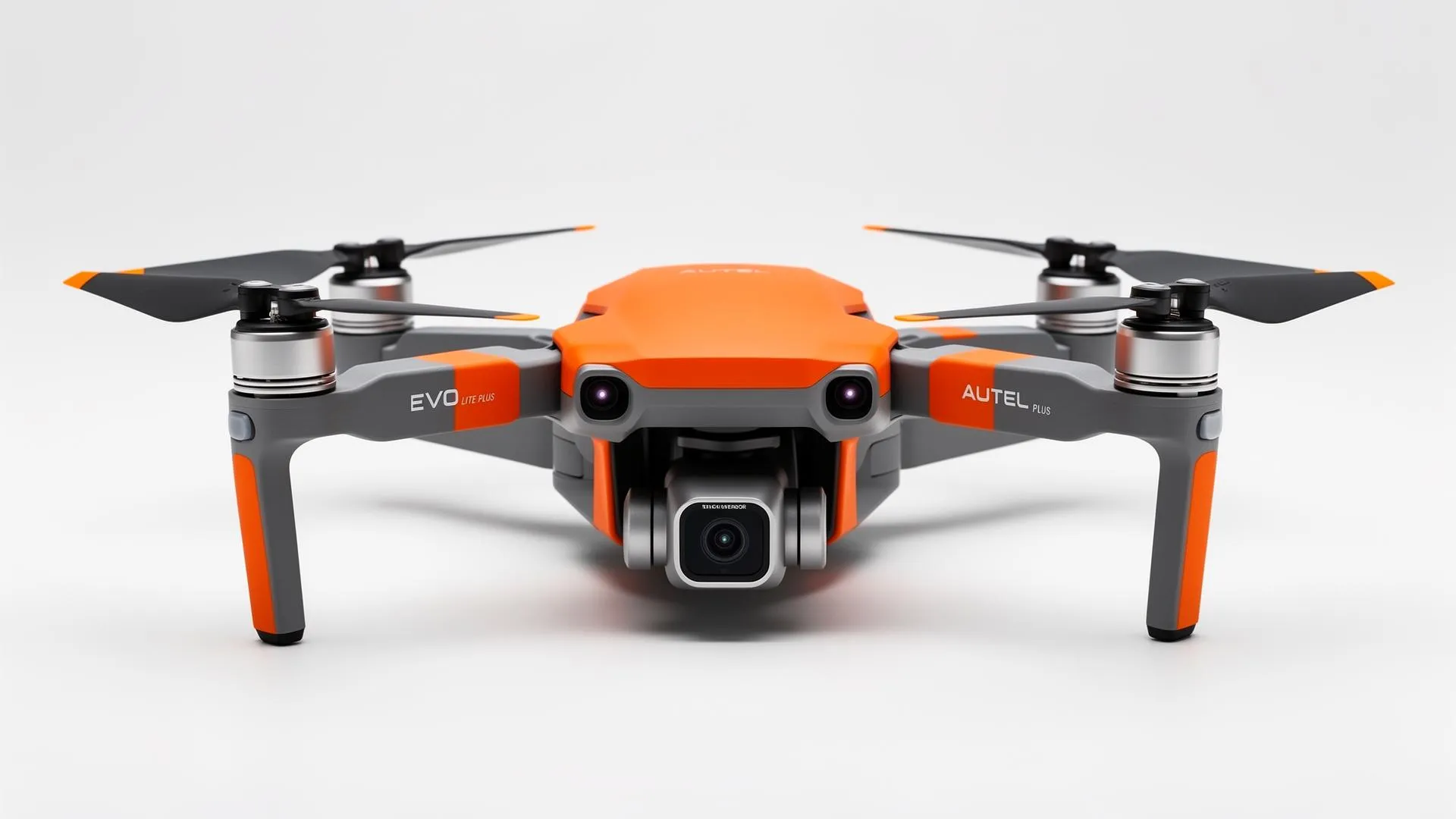
The Autel EVO Nano+ is the drone most often suggested when someone wants a sub-250g camera aircraft but does not want a DJI. It pairs a notably large 1/1.28-inch 50MP sensor with a 249g airframe, no compulsory account, and no built-in geofencing. This review is for the buyer weighing it against the obvious default, the DJI Mini 4 Pro, and trying to work out whether the Nano+ is a genuine alternative or a compromise. It is also written for US readers, because the regulatory picture changed sharply at the end of 2025 and now shapes whether you can even buy one new. No invented test flights here, just the verified specifications, what independent reviewers found, and an honest read on where it fits in 2026.
The one thing to know: the EVO Nano+ has the largest sensor in the sub-250g class and real privacy and airspace advantages over DJI, but it trails the Mini 4 Pro on video frame rates (4K/30 vs 4K/60), obstacle coverage (three directions vs omnidirectional), flight time, and app polish. In late 2025 the FCC added all foreign-made drones, Autel included, to its Covered List, so new US sales hinge on an exemption that currently runs only to 1 January 2027. Outside the US it is a credible Mini 4 Pro rival; inside the US its future is uncertain.
Specifications at a glance
Every figure below is taken from Autel's own product listing (Autel EVO Nano+ store page). The standout number is the sensor: at 1/1.28 inch it is physically larger than the chip in the Mini 4 Pro, which is the single strongest argument for choosing the Nano+.
| Spec | Autel EVO Nano+ |
|---|---|
| Sensor | 1/1.28-inch CMOS, RYYB, 50MP |
| Lens | 23mm equiv., fixed f/1.9, 85° FOV |
| Max video | 4K HDR at 30 fps (3840×2160) |
| Takeoff weight | 249 g |
| Max flight time | 28 minutes (ideal conditions) |
| Transmission | Autel SkyLink, up to 10 km tri-band |
| Obstacle sensing | Forward, backward, downward |
The sensor: a genuine headline, with a real caveat
Autel built the Nano+ around its camera, and the spec sheet backs that up. The 1/1.28-inch RYYB sensor is larger than the 1/1.3-inch chip in the Mini 4 Pro, and the RYYB color filter swaps one green photosite for yellow to gather more light, the same approach DJI uses on its bigger drones. On paper this should mean cleaner low-light footage and more dynamic range, and in good light the 50MP stills hold real detail. If you want to understand why sensor size and the RYYB filter matter more than the megapixel figure printed on the box, our explainer on drone camera sensors covers the physics in plain language.
The honest caveat is that hardware advantage does not fully translate into output. In DPReview's assessment the colors looked duller and less vibrant than competing DJI footage despite Autel's RYYB marketing, and the drone restricted some camera and video controls that rivals leave open (DPReview). The bigger structural limit is motion: the Nano+ tops out at 4K/30, while the Mini 4 Pro shoots 4K/60. If you film moving subjects, want slow-motion latitude, or care about smoother 60 fps panning, that gap is the most consequential single difference between the two drones.
Flight, transmission, and obstacle sensing
Autel rates the Nano+ at 28 minutes per battery in ideal conditions, which in normal mixed flying realistically lands in the low-to-mid 20s. That is respectable for the class but short of the Mini 4 Pro's 34-minute standard battery (and well short of DJI's 45-minute Plus battery, which the Nano+ has no equivalent for). Transmission runs on Autel's SkyLink system, rated to around 10 km, a figure that matters far less than the headline implies because you are legally required to keep the aircraft within visual line of sight in nearly every jurisdiction anyway. What counts in practice is link stability in busy radio environments, and here Autel is solid without matching the reputation of DJI's O4.
Obstacle avoidance is where the spec gap is clearest. The Nano+ senses forward, backward, and downward, and that three-way coverage was genuinely impressive at launch for a drone this small. But the Mini 4 Pro added true omnidirectional sensing, including sideways and upward, which is the safer setup for active-track filming and tight environments. The Nano+ also has no built-in geofencing, which cuts both ways: there are no DJI-style automatic no-fly lockouts, so you keep manual control near restricted zones, but that also means the responsibility for legal airspace falls entirely on you. Knowing your local rules matters more, not less, when the aircraft will not stop you itself.
Strengths
- • Largest sensor in the sub-250g class (1/1.28-inch, 50MP)
- • No mandatory account, no built-in geofencing
- • Strong privacy posture compared with DJI
- • Solid, slightly more rugged build feel
- • Detailed 50MP stills in good light
Limitations
- • 4K/30 only, no 4K/60 like the Mini 4 Pro
- • Three-way sensing, not omnidirectional
- • Shorter flight time, no high-capacity battery
- • Less polished app and color science
- • Uncertain US availability (FCC Covered List)
Autel EVO Nano+ vs DJI Mini 4 Pro
This is the comparison that decides most purchases. The table uses Autel's and DJI's published specifications (DJI Mini 4 Pro specs).
| Spec | Autel EVO Nano+ | DJI Mini 4 Pro |
|---|---|---|
| Sensor | 1/1.28-inch, 50MP | 1/1.3-inch, 48MP |
| Max video | 4K/30 | 4K/60 |
| Obstacle sensing | 3 directions | Omnidirectional |
| Flight time | 28 min | 34 min (45 with Plus) |
| Transmission | SkyLink, ~10 km | O4, up to 20 km |
| Geofencing | None (manual control) | DJI system |
The pattern is clear. The Nano+ wins on sensor size and on autonomy from a manufacturer ecosystem, no forced account and no geofencing lockouts. The Mini 4 Pro wins on the features that most buyers actually use day to day: higher frame rates, fuller obstacle coverage, longer flight time, stronger transmission, and a more refined app. Most independent reviewers, including TechRadar, land on the Mini 4 Pro as the better all-round drone while still calling the Nano+ the most compelling alternative for pilots who specifically want to step outside DJI. For a wider brand-versus-brand look, see our DJI vs Autel comparison, and the full Mini 4 Pro review covers the DJI side in depth.
The US situation: why availability is the real question
For US readers this is the decisive section. On 22 December 2025 the FCC added all foreign-produced uncrewed aircraft systems and critical components to its Covered List, with DJI and Autel referenced under the 2025 NDAA (DroneLife). Being on the Covered List means equipment cannot receive new FCC authorizations, which are required to import, market, and sell most wireless devices in the US. Drone models the FCC previously authorized are not banned from being used or resold, but future models face a real barrier. An exemption currently keeps things moving only until 1 January 2027, after which the framework could tighten.
Autel has pushed back hard. In May 2026 it challenged the designation, arguing the FCC treated foreign manufacturers as interchangeable, relied on broad assumptions rather than an individualized review, and improperly lumped Autel in with DJI (DroneDJ). The outcome is unresolved as of mid-2026. The practical takeaway for a US buyer: the Nano+ is still findable, but stock, support continuity, and the chance of future firmware or warranty service are all less certain than they were a year ago. If you are weighing whether to commit at all, our piece on whether buying a drone is worth it in 2026 walks through the running costs and risks beyond the sticker price.
Price and current status
Autel lists the EVO Nano+ standard package at 679 USD on its own store (Autel store), which puts it close to the Mini 4 Pro's pricing rather than meaningfully undercutting it. Outside the US it remains in active distribution and is a legitimate Mini 4 Pro rival in 2026, especially for pilots who value the larger sensor and the privacy and airspace freedoms. Inside the US, treat the listed price as a starting point and verify current availability and support before buying, because the Covered List situation is fluid. Prices and stock move, so confirm both at the point of purchase. You can also compare it against the broader field on our drones overview.
The verdict
The EVO Nano+ is the strongest non-DJI option in the sub-250g class, and the only one that makes the Mini 4 Pro work for its win. Its big sensor, account-free setup, and lack of geofencing are real advantages for privacy-minded pilots and anyone who dislikes locked-down ecosystems. But it loses on the everyday metrics, 4K frame rate, obstacle coverage, flight time, and software polish, and in the US the post-2025 FCC restrictions make its future genuinely uncertain. Buy it for what makes it different, not as a like-for-like replacement for the Mini 4 Pro.
Who the EVO Nano+ is for
A good fit if you
- • Want the biggest sensor in the class
- • Prefer no forced account or geofencing
- • Shoot mostly stills and slower scenes
- • Want a deliberate alternative to DJI
- • Fly outside the US, where stock is stable
Look elsewhere if you
- • Need 4K/60 or smooth slow motion
- • Want omnidirectional obstacle sensing
- • Value the longest flight time and best app
- • Are a US buyer needing long-term support
- • Just want the safest default (Mini 4 Pro)
Whichever way you lean, do not skip registration and the legal basics. At 249 g the Nano+ sits right on the sub-250 g line, which lightens the rules in many countries but rarely removes them, especially for camera drones. EU and German pilots should read our guide to registering a drone in Germany before the first flight.
Frequently asked questions
Is the EVO Nano+ better than the DJI Mini 4 Pro?
Not overall. The Nano+ has a larger sensor and no geofencing or forced account, but the Mini 4 Pro wins on 4K/60 video, omnidirectional obstacle sensing, longer flight time, stronger transmission, and a more polished app. Most reviewers rate the Mini 4 Pro as the better all-round drone, while calling the Nano+ the best non-DJI alternative.
Can I still buy an Autel EVO Nano+ in the US in 2026?
For now, often yes, but it is uncertain. In December 2025 the FCC added all foreign-made drones, Autel included, to its Covered List, which blocks new FCC authorizations needed to import and sell new models. Previously authorized units can still be sold and used, and an exemption currently runs to 1 January 2027. Verify current stock and support before buying.
Does the EVO Nano+ have geofencing or require an account?
No on both counts. Unlike DJI, Autel does not require you to create an account to fly, and the Nano+ has no built-in geofencing lockouts. That gives you more manual control near restricted areas, but it also means full legal responsibility for staying out of no-fly zones rests with you, so knowing local airspace rules is essential.
What video resolution does the EVO Nano+ shoot?
Up to 4K HDR at 30 fps. It does not offer 4K/60, which the DJI Mini 4 Pro does. For stills it captures 50MP from its 1/1.28-inch RYYB sensor, the largest in the sub-250g class.
Do I need to register the EVO Nano+?
At 249 g it sits just under the common 250 g threshold, which lightens the rules in many countries but rarely removes registration or operator-ID requirements for camera drones. Always check your local regulations first, our guide to registering a drone in Germany covers the EU process, and US pilots should confirm Remote ID compliance.
How good is the low-light camera in practice?
The hardware is promising: a large 1/1.28-inch sensor with an RYYB filter and a bright f/1.9 lens should gather plenty of light. In practice, DPReview found Autel's color rendering looked duller than competing DJI footage, so the on-paper advantage does not fully translate. It produces good results, but does not clearly beat DJI on processed image quality.
This review is based on Autel's published specifications and reputable third-party reporting. It is not sponsored by Autel, and the site may earn an affiliate commission on purchases made through retailer links. Specifications, pricing, and regulatory status verified June 2026.
Frequently Asked Questions
Is the EVO Nano+ better than the DJI Mini 4 Pro?
Not overall. The Nano+ has a larger sensor and no geofencing or forced account, but the Mini 4 Pro wins on 4K/60 video, omnidirectional obstacle sensing, longer flight time, and app polish. Most reviewers rate the Mini 4 Pro as the better all-rounder and the Nano+ as the best non-DJI alternative.
Can I still buy an Autel EVO Nano+ in the US in 2026?
For now, often yes, but it is uncertain. In December 2025 the FCC added all foreign-made drones, Autel included, to its Covered List, blocking new authorizations needed to import and sell new models. Previously authorized units can still be sold, and an exemption currently runs to 1 January 2027. Verify stock and support before buying.
Does the EVO Nano+ have geofencing or require an account?
No on both. Unlike DJI, Autel does not require an account to fly, and the Nano+ has no built-in geofencing lockouts. That gives more manual control near restricted areas, but full legal responsibility for staying out of no-fly zones rests with you.
What video resolution does the EVO Nano+ shoot?
Up to 4K HDR at 30 fps. It does not offer 4K/60, which the Mini 4 Pro does. For stills it captures 50MP from its 1/1.28-inch RYYB sensor, the largest in the sub-250g class.