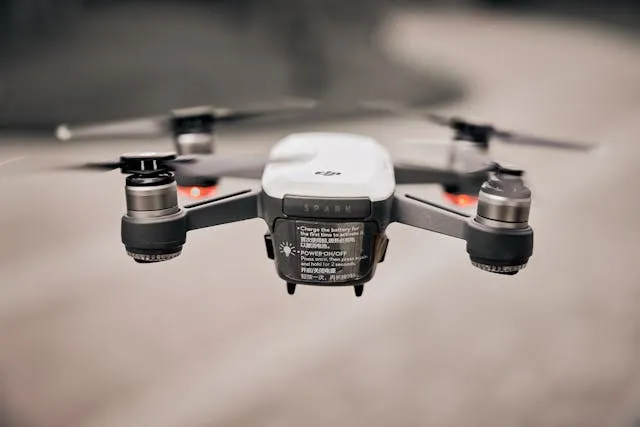
The DJI Spark was the drone that taught a generation of non-pilots that you could launch an aircraft off your palm and wave it into a selfie. It arrived in May 2017 at 499 USD and was DJI's first true lifestyle drone. This is not a buying recommendation. The Spark was discontinued in 2019 and DJI formally ended all official support for it on 1 October 2024, which means no firmware, no repairs, no spare parts, and no replacement batteries through official channels. This review is for the person trying to decide whether a used Spark is worth anything in 2026, the collector who wants the history straight, and anyone tempted by a cheap listing who should know what they are really buying. Honest facts, no nostalgia goggles.
The one thing to know: the DJI Spark is a historically important drone with effectively zero practical value today. Its 1080p video, 16-minute flights, two-axis gimbal, and Wi-Fi transmission were impressive in 2017 but are obsolete now, and DJI no longer sells batteries or parts for it. If you want what the Spark promised, palm launch and gesture flight, the modern DJI Neo line does it far better for around 199 USD. Buy a Spark only as a collector's piece, not as a flying camera.
Specifications at a glance
Every figure below comes from DJI's published Spark specifications and the documented launch data. The comparison column is the 2024 DJI Neo, the closest modern equivalent in size and philosophy.
| Spec | DJI Spark (2017) | DJI Neo (2024) |
|---|---|---|
| Launch price | 499 USD | 199 USD |
| Takeoff weight | 300 g | 135 g |
| Sensor | 1/2.3-inch CMOS, 12 MP | 1/2-inch CMOS, 12 MP |
| Max video | 1080p / 30 fps | 4K / 30 fps |
| Stabilization | 2-axis mechanical gimbal | 1-axis gimbal + electronic |
| Flight time | 16 min | 18 min |
| Transmission | Wi-Fi, ~2 km (controller) | O4 / Wi-Fi, up to 10 km |
| Gesture / palm control | Yes (first DJI drone) | Yes (AI subject tracking) |
Airframe and flight (Spark)
1480 mAh LiPo
50 km/h (Sport mode)
Forward + downward
GPS + GLONASS
4,000 m
2017 to 2019
Why the Spark mattered: gesture control before anyone else
Before the Spark, owning a drone meant a controller, an app, and a willingness to read a manual. DJI's pitch was radical for 2017: take off from your palm, frame a shot with your hands, and land back on your hand, no controller required. It was the first DJI drone to support hand-gesture control, and a software update in August 2017 added gesture-triggered recording. The QuickShot automated moves (Rocket, Dronie, Circle, Helix) let a complete beginner pull off cinematic passes with a single tap.
The execution was rough by today's standards. Gesture recognition was unreliable outside good light, the palm-launch took practice to trust, and the 2-axis gimbal leaned on electronic stabilization to fake the missing third axis. But the concept was genuinely new, and it defined an entire product category. Every palm-sized autonomous camera that followed, from the HOVERAir X1 to DJI's own Neo, traces directly back to what the Spark proved: a drone could be a lifestyle gadget, not a hobbyist's project.
Image quality and flight: good for 2017, dated now
The Spark's 12 MP 1/2.3-inch sensor and 2-axis mechanical gimbal produced clean, stable 1080p video that genuinely impressed reviewers at launch. In bright daylight the footage still looks acceptable on a phone screen. The problem is everything around it. There is no 4K, no 10-bit colour, and the small sensor falls apart the moment light drops. The 16-minute flight time was the single most criticised limitation even in 2017, and it has not aged any better.
Flight behaviour was the Spark's strongest suit. GPS and GLONASS positioning, downward vision sensing, and forward obstacle detection made it stable and forgiving for a first-time pilot. Wi-Fi transmission was the weak point: range and reliability lagged far behind the OcuSync system DJI was already shipping in the Mavic line, and the video feed could stutter or drop in busy radio environments. Understanding why these tiny aircraft live and die by their batteries and radios is half the story of any small drone, and our explainer on drone battery technology covers why a 1480 mAh cell could only ever buy you 16 minutes.
The deal-breaker: discontinued, unsupported, and hard to keep flying
This is the section that should decide the purchase. DJI stopped selling the Spark in 2019 and effectively replaced it with the Mavic Mini. More importantly, DJI added the Spark to its official end-of-service list with a cutoff date of 1 October 2024, confirmed in DJI's support documentation and reported widely (SlashGear). After that date the Spark no longer receives firmware updates, official repairs, spare parts, or customer support.
In practice the killer is the battery. The Spark uses an intelligent LiPo pack that degrades whether you fly it or not, and DJI no longer manufactures or sells official replacements. Any battery you find now is years old, likely swollen or near end-of-life, and a used or third-party pack in a flying aircraft is a genuine fire and crash risk. A drone you cannot safely power is not a drone, it is a display piece. That single fact, more than the dated camera, is why the Spark cannot be recommended as a flyer in 2026.
What "end of support" actually removes
No bug fixes or geozone updates
No official service or parts
Only aging used or third-party cells
How it compares to a modern selfie drone
The fairest comparison is not another 2017 drone, it is the device built to do exactly what the Spark pioneered. That is the DJI Neo, launched in 2024 at 199 USD, and the more capable DJI Mini 4 Pro for serious imaging.
| Model | Sensor | Max video | Flight time | Status |
|---|---|---|---|---|
| DJI Spark | 1/2.3", 12 MP | 1080p / 30 | 16 min | Discontinued, unsupported |
| DJI Neo | 1/2", 12 MP | 4K / 30 | 18 min | Current, 199 USD |
| DJI Mini 4 Pro | 1/1.3", 48 MP | 4K / 100 HDR | ~34 min | Current, premium sub-250 g |
The gap is brutal. The DJI Neo is less than half the Spark's launch price, weighs 135 g, shoots 4K, adds AI subject tracking, and is fully supported with available batteries. Its single-axis gimbal is technically simpler than the Spark's two-axis unit, but electronic stabilization and modern processing more than close that gap, and the Neo executes the palm-launch fantasy the Spark only gestured at. For anyone who wants real image quality in a tiny, legal-everywhere sub-250 g body, the DJI Mini 4 Pro is in a different league entirely with its 48 MP 1/1.3-inch sensor and 3-axis gimbal. If you are specifically choosing between DJI's current featherweights, our Flip vs Neo 2 comparison breaks down which tiny flyer fits which creator. For the broader category, our HOVERAir X1 review covers the leading non-DJI selfie drone.
Who the Spark is for in 2026
Worth it if you
- • Collect DJI hardware and want the gesture pioneer
- • Need it for a museum, classroom, or demo display
- • Find one cheap with a still-healthy battery to tinker
- • Accept it may never fly reliably again
Skip it if you
- • Want usable footage or any 4K
- • Need a drone you can actually rely on
- • Cannot source a safe, current battery
- • Are buying your first or only drone
The verdict
The DJI Spark earns its place in drone history. It made gesture control and palm launch mainstream and opened the hobby to people who would never have touched a traditional quadcopter. As a 2026 purchase, though, it is a curiosity, not a camera. The obsolete 1080p sensor and 16-minute flights are the small problems. The real one is that DJI has cut off support, so spare parts and safe batteries are gone, and a drone you cannot reliably power is a paperweight. Buy it to honour the history. Buy a DJI Neo to actually fly.
For current recommendations across the lineup, browse our full drone reviews hub.
This review is based on DJI's published specifications and reputable third-party reporting. It is not sponsored by DJI, and the site may earn an affiliate commission on purchases made through retailer links. Specifications and support status verified June 2026.
Frequently Asked Questions
Is the DJI Spark still worth buying in 2026?
Only as a collector's piece. The 1080p camera and 16-minute flight time are obsolete, and DJI ended all official support on 1 October 2024, so there are no firmware updates, repairs, spare parts, or batteries. For actual flying, the DJI Neo costs less and does far more.
When was the DJI Spark discontinued and when did support end?
DJI launched the Spark in May 2017, stopped selling it in 2019 (replaced by the Mavic Mini), and placed it on its official end-of-service list with a cutoff of 1 October 2024. After that date it receives no firmware, repairs, parts, or support.
Can you still get batteries for the DJI Spark?
Not officially. DJI no longer manufactures or sells Spark batteries. Any pack available now is years old or third-party, which carries real swelling, fire, and reliability risks. The lack of a safe, current battery is the main reason the Spark is no longer flyable in practice.
What should I buy instead of a DJI Spark?
The DJI Neo (199 USD) is the direct spiritual successor: lighter, 4K video, AI tracking, palm launch, and full support. For better image quality in a sub-250 g body, step up to the DJI Mini 4 Pro with its 1/1.3-inch 48 MP sensor and 3-axis gimbal.
Did the DJI Spark really invent gesture control?
It was the first DJI drone with hand-gesture control, including palm launch and, after an August 2017 update, gesture-triggered recording. Recognition was unreliable in poor light, but the concept defined the modern selfie-drone category that the Neo and HOVERAir X1 later perfected.